7 Paddleboard Balance Mistakes That Keep Dumping You in the Water
Quick Answer: Most paddleboard falls come from stiff legs, looking down at your feet, poor paddle stroke timing, or standing up too fast rather than actual balance ability — softening your knees, fixing your gaze on the horizon, and standing up in stages solves the majority of stability problems beginners run into.
If you keep going in the water despite feeling reasonably coordinated on land, the issue is very likely one of these specific technique habits, not your balance itself.
Mistake 1: Standing with locked, stiff knees
Stiff, locked knees transmit every small wobble directly through your whole body, making tiny water movements feel destabilizing. Slightly bent, soft knees act as natural shock absorbers that keep your center of gravity more stable.
Mistake 2: Looking down at your feet or the board
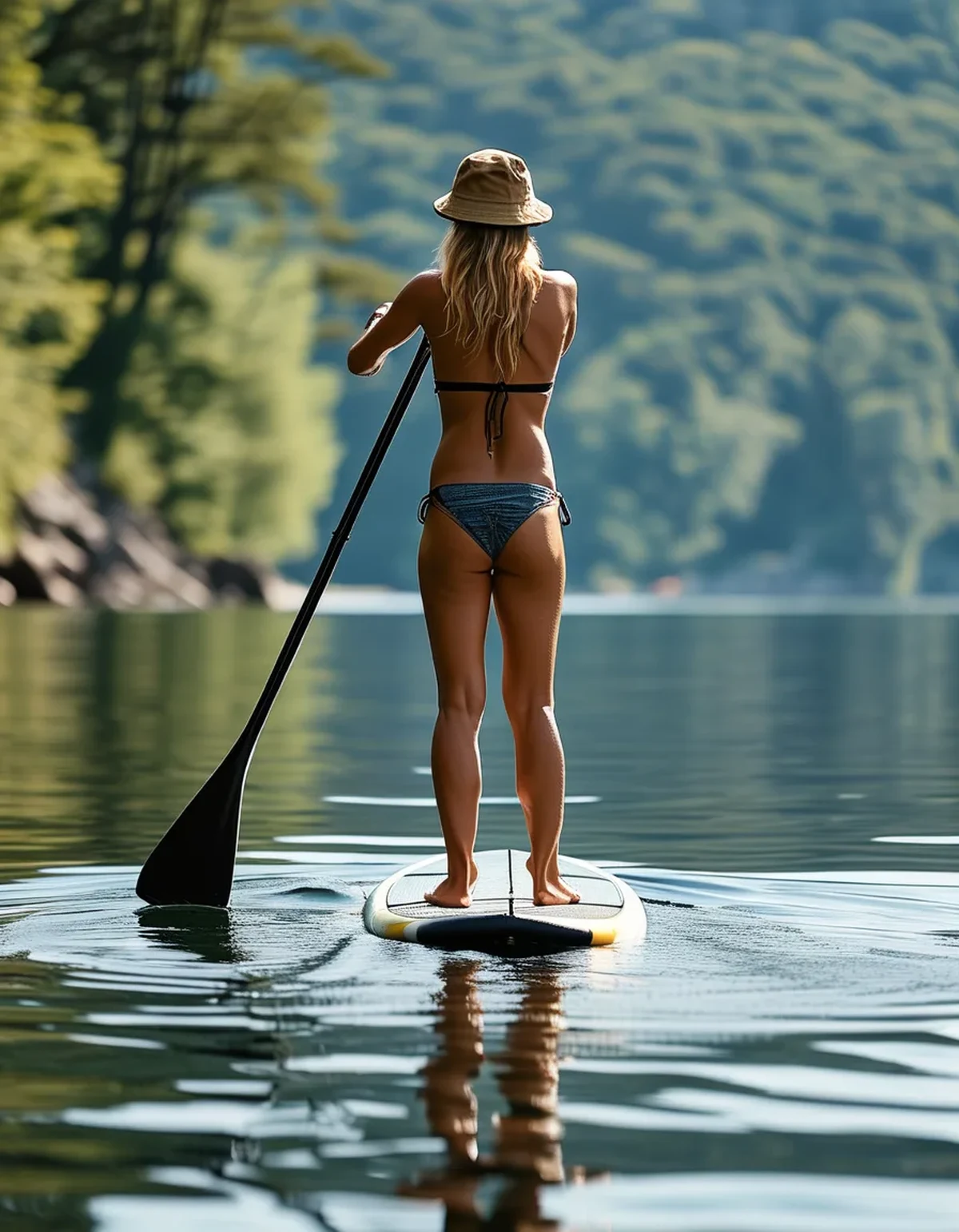
Looking down shifts your weight and center of balance forward and down, which is destabilizing. Keeping your gaze fixed on the horizon, the way surfers and skiers do, helps your body maintain a more naturally balanced posture.
Mistake 3: Standing up too quickly from kneeling
Standing up in one fast motion while the board is still settling gives you no margin to adjust. Rising in controlled stages — hands on the board, one foot at a time — gives your balance system time to adapt.

Mistake 4: Paddling with poor stroke timing
Erratic, rushed paddle strokes create their own instability by shifting your weight unpredictably. A smoother, more rhythmic stroke keeps your weight distribution more consistent and predictable.
Mistake 5: Placing your feet too close together
Feet placed too close together narrows your base of support significantly. A stance roughly hip-width apart, centered over the board, provides meaningfully more stability than a narrow, tight foot placement.
Mistake 6: Tensing your entire body when you feel wobbly
Full-body tensing when you feel unstable actually makes small corrections harder, not easier. Staying relatively relaxed, letting your knees and ankles make small adjustments, recovers balance more effectively than freezing up.
FAQ: Paddleboard Balance Fundamentals, Answered
How long does it typically take to feel stable standing on a paddleboard?
Most beginners find a reasonable comfort level within a few sessions of consistent practice, especially on calm water.
Does board width affect how forgiving these mistakes are?
Yes — a wider, more stable beginner board is more forgiving of these technique errors than a narrower, performance-oriented board.
Is calm water actually necessary while correcting these habits?
Yes, strongly recommended — practicing balance corrections on calm, flat water before progressing to any chop or current makes learning significantly easier.
TL;DR:
- Stiff knees and looking down are two of the most common, most fixable balance killers
- Standing up in controlled stages beats rising quickly from kneeling
- Smooth paddle stroke timing and hip-width foot placement both support real stability
- Staying relaxed rather than tensing up helps you actually recover from a wobble
Keep Reading
This article is for general informational and styling purposes only. Fit, sizing, and product availability may vary.