7 Paddleboard Mistakes That Only Show Up on an Early Morning Paddle
Quick Answer: Morning paddling removes wind and chop, which removes the feedback most paddlers unknowingly rely on. Technique faults that chop was hiding become the limiting factor, while cold air, cold water, low sun and being alone add risks that an afternoon session does not have. The seven below are the ones that reliably catch people out between late August and October.
Glassy water is not easier. It is more honest.
And the margin for error at 6am in September is considerably smaller than at 2pm in July.
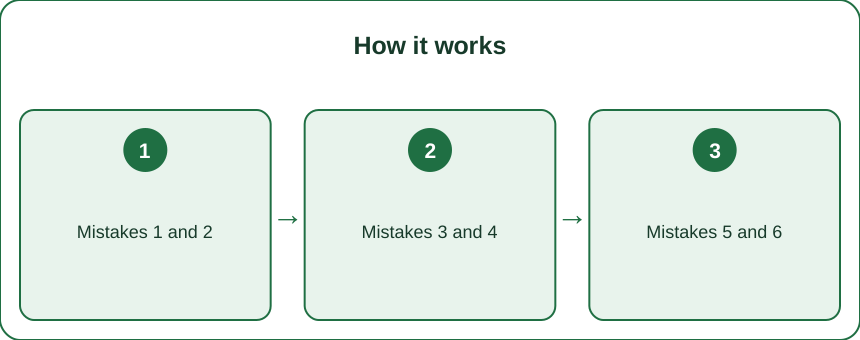
Mistakes 1 and 2: Dressing for the air, and trusting yesterday’s water
Mistake 1: Dressing for the air temperature
At dawn the air is often colder than the water, and by 10am it is warmer. Dressing for the moment you launch means being wrong for most of the session in one direction or the other.
Dress for immersion, not for standing on the board. The relevant question is what happens if you go in, and in autumn the answer changes considerably from what it was in July.
A thin layer that dries fast beats a warm layer that does not. Anything cotton is a poor choice on a cold morning, because once it is wet it stays wet for the rest of the session.
Extremities lose heat first and matter most. Cold hands compromise grip and paddle control long before you feel cold generally.
Mistake 2: Assuming the water is the temperature it was last month
Water temperature lags air temperature by weeks, which cuts both ways. In late summer the water is often still warm when mornings are cold. By October, it has caught up and then some.
Check actual water temperature rather than inferring it. Local buoy or lake data is widely available and takes thirty seconds.
Cold water shock is a real risk below roughly 60F, and it affects breathing control immediately on immersion, regardless of swimming ability. This is worth taking seriously rather than treating as a comfort question.
Mistakes 3 and 4: Paddling without chop, and chasing the mirror
Mistake 3: Losing the feedback chop was giving you
On choppy water, an inefficient stroke gets punished immediately and you correct without noticing. On glass, a poor stroke still moves the board, so nothing corrects.
Common faults that flat water hides: a stroke that continues too far behind the hip, a bent lower arm, a torso that stays square instead of rotating, and a shallow blade that never fully buries.
Watch your wake. On flat water you can actually see your track. A board weaving side to side means your stroke is pushing the nose off line, usually because the stroke runs too far back.
Count strokes per side. If you can only hold three or four before the board turns, your catch is too far out from the rail or your exit is too far back.
Mistake 4: Getting hypnotised by flat water and paddling too far out
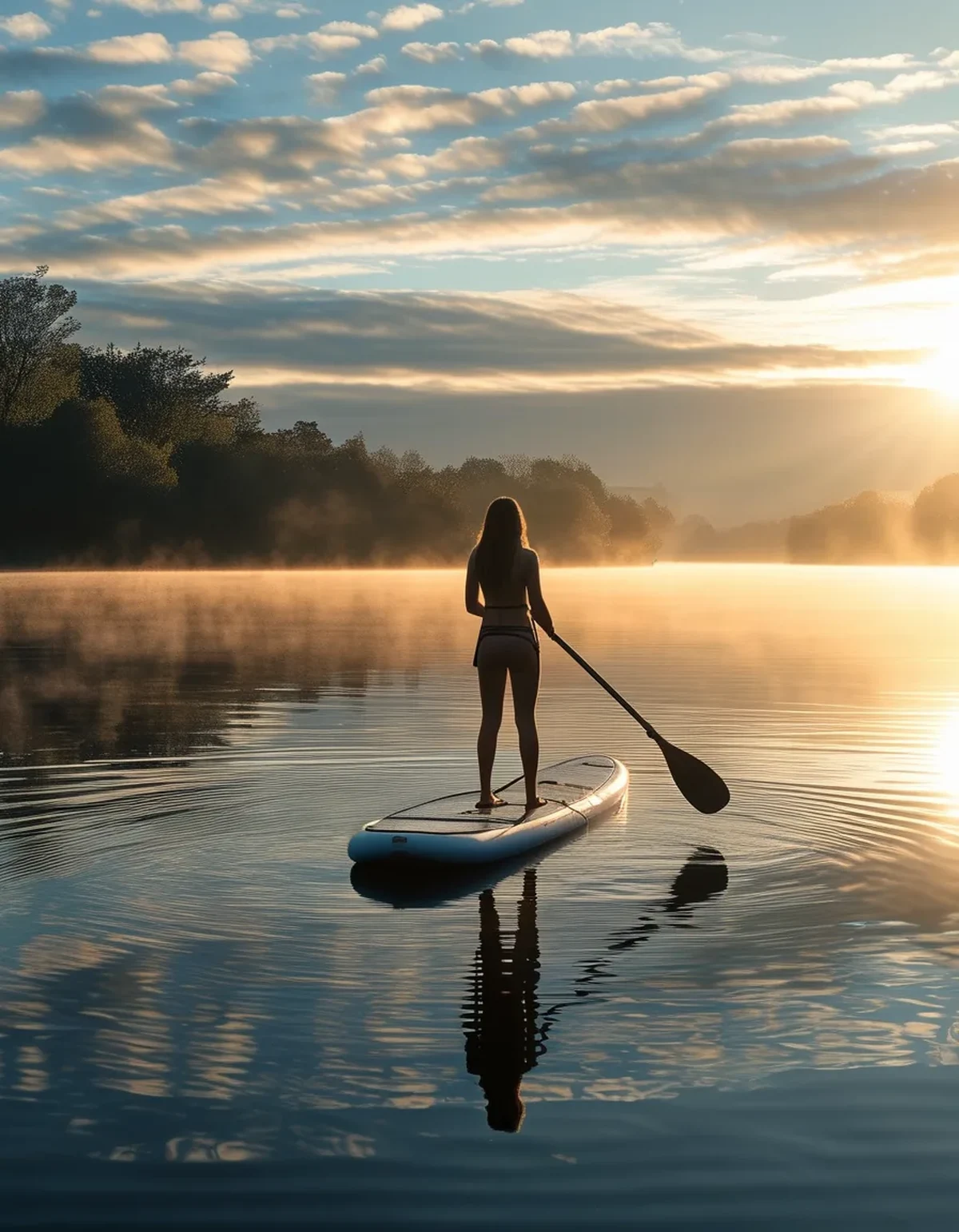
Glassy conditions make distance feel trivial, and the return leg is where morning paddles go wrong. Wind almost always builds through the morning, so the way back is frequently harder than the way out.
Plan out-and-back with the return in mind. Turn at one third of your energy, not one half, on any morning with a forecast breeze.
Check the forecast for wind arrival time, not just wind speed. A 9am onshore breeze changes a 7am plan completely.
Mistakes 5 and 6: The low sun, and going alone without telling anyone
Mistake 5: Underestimating low-angle sun
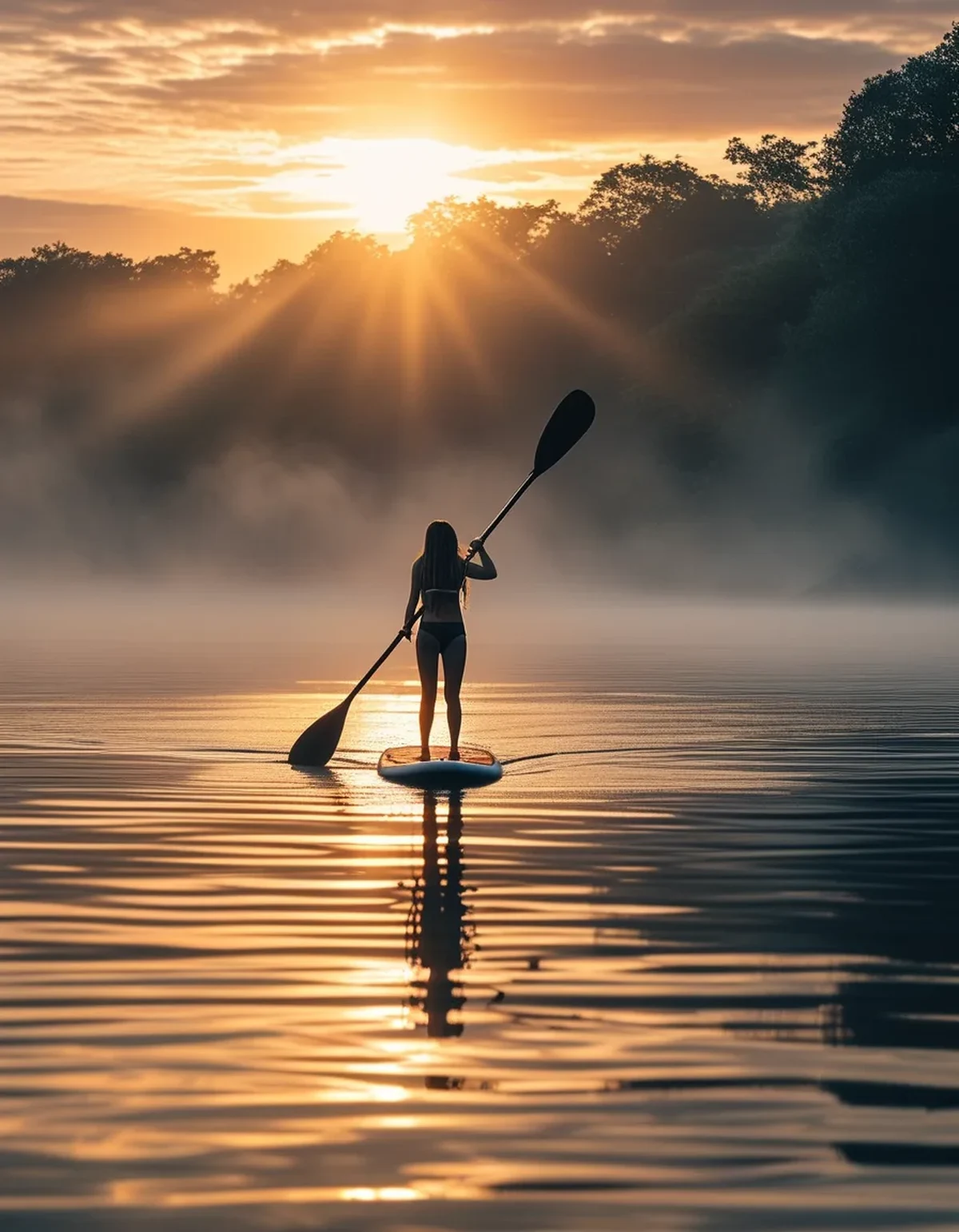
A sun low on the horizon reflects off flat water almost directly into your eyes, and the glare is far worse than midday sun. It affects your ability to see other craft, debris, and the shoreline you are navigating by.
Sunglasses with a retainer strap are close to essential. Without a strap they end up on the bottom, which is why most paddlers stop wearing them.
Plan direction around the sun. Paddling directly into a low sun on the outbound leg means paddling into it again on the way back if the timing is wrong.
Low sun also makes you invisible to others. Anyone looking toward the sun cannot see you at all, which matters on water shared with boats.
Mistake 6: Solo paddling with nobody knowing the plan
Morning sessions are usually solo, and there are far fewer people around to notice a problem than at midday.
Tell someone the launch point, route and expected return time. This takes one message and is the single highest-value safety habit available.
Carry a phone in a waterproof case, attached to you or the board, not loose in a dry bag that floats away with the board.
Wear the leash. A board separated from its rider in cold water is the most common way a manageable situation becomes a serious one. Match leash type to the water: a coiled leash for flat water, and an appropriate quick-release setup for any moving water.
And a personal flotation device is a reasonable default in cold water, whatever the local rule says.
Mistake 7: Treating the warm-up as optional because it looks calm
Calm water invites you to launch immediately, and cold morning tissue is the least prepared it will be all day.
Shoulders and the thoracic spine do most of the paddling, and both are stiffer at 6am in 50F air than they are at midday.
Two minutes covers it. Arm swings, shoulder rolls, torso rotations and a few standing side bends before you get on the board.
Start the first five minutes deliberately easy. Half effort, longer strokes, no attempt at pace. This is where you also discover whether your stroke is working today.
Balance is worse when cold. Proprioception and fine muscular control are both reduced in cold conditions, so the first few minutes on the board are the most likely moment to go in.
Kneel for the first minute if the water is cold. It costs nothing, and standing up straight away in cold conditions on a cold body is the most common early swim.
And check the board and fin before launching, not after. Fin bolts loosen over a season, and a fin lost mid-session on a solo morning paddle is a long way home.
One note on conditions: if you are new to cold-water paddling, build up gradually and consider going with someone else until you know how your body responds. Cold water carries real risk, and this is general information rather than safety certification.
FAQ: Morning Paddling Questions, Answered
Is morning really better for paddling?
Usually, yes. Wind is typically lightest early, water is flattest, and traffic is lowest. The trade-offs are cold and low sun.
What water temperature needs a wetsuit?
It depends on exposure and duration, but cold water shock becomes a meaningful risk below roughly 60F. Check local guidance and err toward more protection.
Why does my stroke feel worse on flat water?
It does not feel worse, it is more visible. Chop masks inefficiency; glass shows you exactly where the board is being pushed off line.
How far out should I go alone?
Far enough that you could comfortably return against a headwind that arrives unexpectedly. Turning at one third of your energy is a reasonable rule.
Do I need a leash on flat water?
Yes. Separation from the board is the main way cold-water incidents escalate, and flat water does not change that.
What should I do about glare?
Polarised sunglasses with a retainer strap, and plan your route so you are not paddling directly into a low sun on both legs.
TL;DR:
- Dress for immersion, not for the air temperature at launch.
- Water temperature lags air temperature by weeks, in both directions.
- Flat water exposes stroke faults that chop was quietly correcting.
- Wind builds through the morning, so plan the return leg first.
- Low sun causes worse glare than midday and makes you invisible to boats.
- Tell someone your plan, wear the leash, carry a phone attached to you.
- Two minutes of warm-up matters more on a cold morning than on a warm afternoon.
Glassy water is the most honest coach you will paddle with all year.
Keep Reading
This article is for general informational and styling purposes only. Fit, sizing, and product availability may vary.