Seven Things That Change When the Water Stays Warm and the Air Turns Cold
Quick Answer: Water holds heat far longer than air, so early autumn gives you warm water under cold air - which produces glassy morning conditions, more fog, sharper afternoon wind, and a false sense of safety about immersion. Seven specific things change: thermal risk shifts from the air to the wind, morning fog becomes a navigation problem, wind patterns get stronger and later, daylight shrinks fast, water levels and debris change, other water users disappear, and your gear needs a different failure plan. The conditions are genuinely excellent. The margin for error is much thinner.
The water is still summer. Everything above it is not.

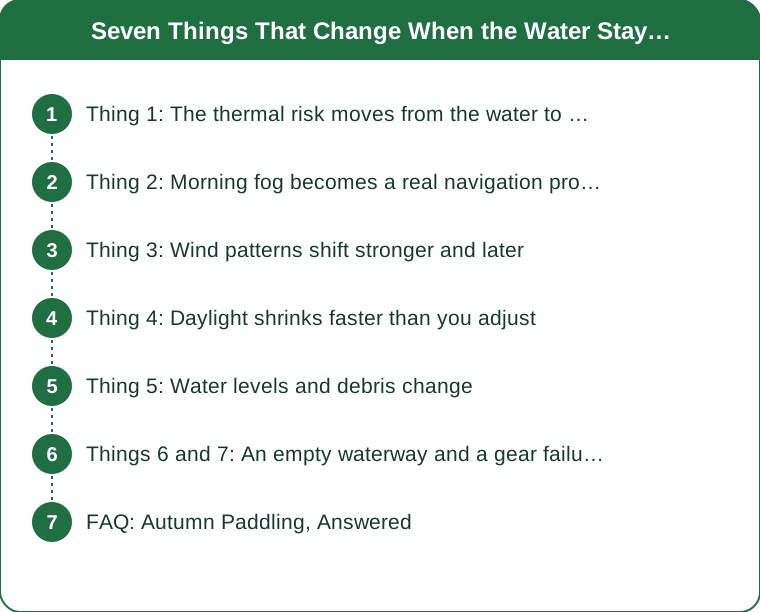
Thing 1: The thermal risk moves from the water to the wind
Water in early autumn is often still comfortable for immersion, which is why the season feels safe.
The danger is being wet in cold moving air. Evaporative cooling from a wet body in a fifteen-knot wind at 55 degrees produces heat loss far faster than the water itself did.
A fall in is not the risk; the paddle back afterwards is. This inverts from summer, where getting wet was the cooling relief.
Dress for the combination, not for either alone - a light windproof layer over an insulating base is the standard early-autumn answer.
Carry a dry layer in a dry bag. This is the single most useful piece of autumn kit and it weighs almost nothing.
And check the wind before the air temperature. Wind is the variable that turns a comfortable paddle into a serious one.
Thing 2: Morning fog becomes a real navigation problem
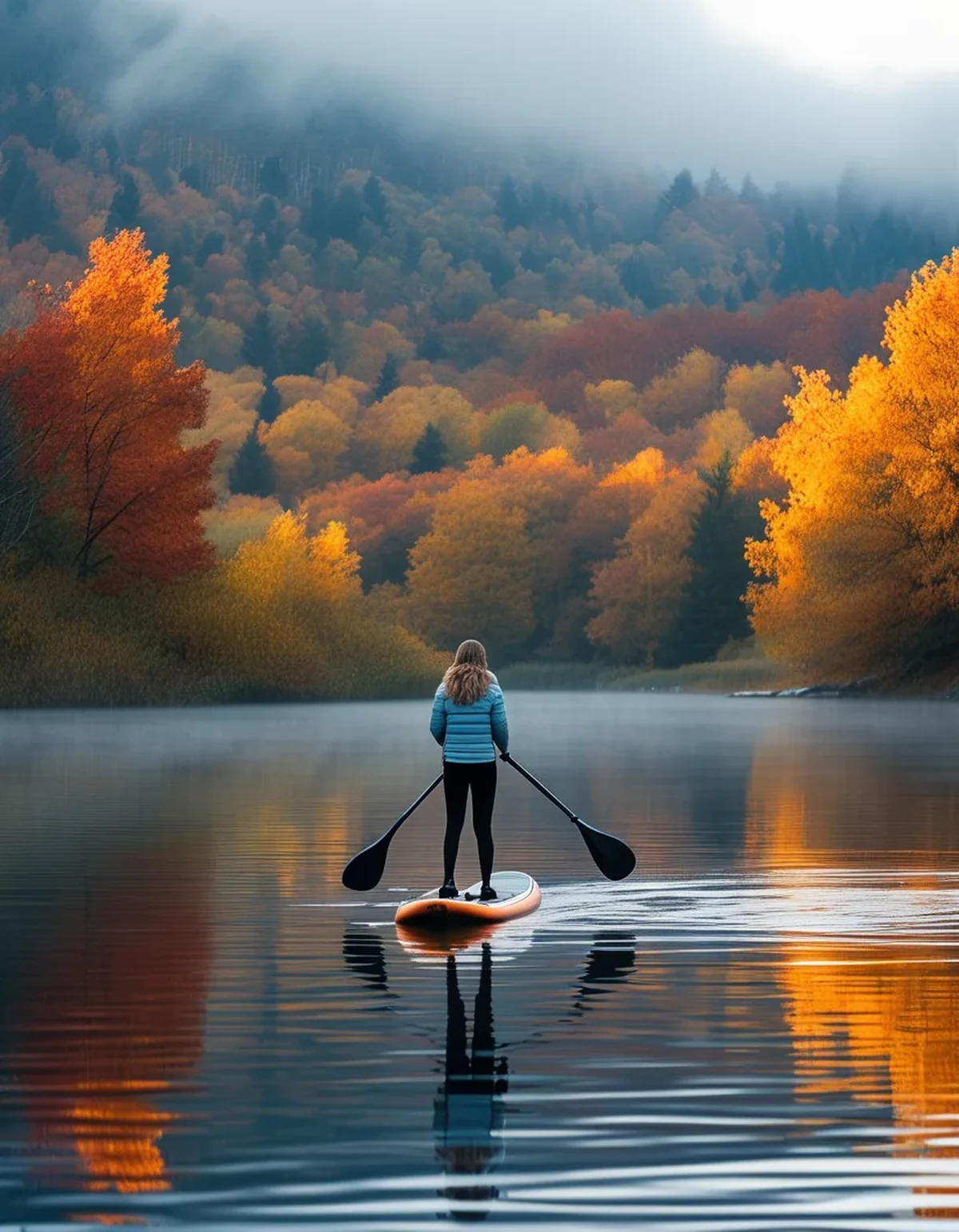
Warm water and cold air produce steam fog, and early autumn mornings are when it is most common and most dense.
It looks beautiful and it removes every visual reference - shoreline, landmarks, and other craft all disappear within metres.
Disorientation on flat water is remarkably fast, and people paddle in circles or away from shore without any sense of having turned.
Carry a compass or use a phone in a waterproof case, and know your bearing back to the launch before you leave it.
Stay within sight of shore in fog, which usually means much closer than feels necessary.
And carry a sound signal. In fog you are invisible to powered craft, and a whistle is the only thing that changes that.
Thing 3: Wind patterns shift stronger and later
Autumn brings stronger frontal systems and more variable wind than the settled patterns of midsummer.
Thermal wind builds later in the day as the sun angle drops, so the calm morning window closes differently than it did in July.
Offshore wind is the specific hazard. It is deceptively easy to paddle out with the wind behind you and extremely hard to return against it, and a paddleboard is a large sail with a small engine.
Check the forecast for the return leg, not the departure - the wind at 11am is what matters if you launched at 9am.
Plan the outbound leg into the wind wherever possible, so the tired return is assisted.
And set a turnaround time and hold it. Wind that builds during the paddle turns a scheduled two-hour trip into something much longer.
Thing 4: Daylight shrinks faster than you adjust
Sunset moves earlier by roughly a minute a day through autumn, which compounds quickly across a few weeks.
Usable light on the water ends before sunset, particularly with any cloud or when paddling near a wooded shoreline.
Cold air after sunset makes any delay significantly more serious, because the temperature drop is fast once the sun is down.
Launch earlier rather than planning to finish later, and rebuild the habit each fortnight rather than each season.
Carry a light even on trips you expect to finish in daylight - the same principle as autumn running.
And tell someone your plan and expected return time. This is basic practice in any season and it matters most when the margin for delay is smallest.
Thing 5: Water levels and debris change
Autumn rain raises river levels and increases current speed, sometimes substantially and quickly.
Flow that was a gentle drift in August can be a genuine current in October, which changes the difficulty of any upstream return.
Storm debris enters the water - branches, whole trees, and washed-in material - and strainers on moving water are among the most serious hazards in paddling.
Leaf cover on the water hides floating debris, which is a direct parallel to the trail-riding problem in the same season.
Lake levels often drop in late summer and early autumn, exposing rocks and shoals that were safely submerged.
And scout familiar launches again. Autumn is when a launch you have used a hundred times has changed, and assuming otherwise is how people damage boards and ankles.
Things 6 and 7: An empty waterway and a gear failure plan
Thing 6: The water empties of other people
Fewer paddlers, fewer boats, and fewer people on shore means less chance that someone sees a problem.
Rescue response times increase where seasonal patrols have finished for the year.
Paddle with someone if you can, and if not, be explicit with someone on land about where and when.
Carry communication in a waterproof case, and know whether there is signal on your route.
Stay closer to shore than in summer, since the self-rescue margin is smaller in every respect.
And do not push a distance you have not already done comfortably - autumn is the wrong season for a first attempt at a longer route.
Thing 7: Your gear needs a failure plan, not just a comfort plan
A leash is non-negotiable in autumn. A board blowing away from you in cold air with an offshore wind is the scenario that turns an inconvenience into an emergency.
Wear the personal flotation device rather than strapping it to the board. Cold-water gasp response is real, and the moment you need it is the moment you cannot fit it.
Carry a dry bag with a warm layer, a phone, and a snack. Energy availability drops fast when cold, and food matters more than people expect.
Gloves and a hat make a disproportionate difference because hands and head lose heat quickly and hands are what operate everything.
Check your gear before the season, not during it - failing hardware in cold conditions is a different problem from failing hardware in August.
And know the self-rescue you will use, in the conditions you will use it. Remounting a board in a chop with cold hands is meaningfully harder than practising it in warm flat water, and it is worth practising deliberately while conditions are still forgiving. This is general information, not safety certification - take a local course and follow local guidance.
FAQ: Autumn Paddling, Answered
Is the water or the air the bigger risk in fall?
The combination. Water often stays comfortable while cold air and wind make being wet the actual hazard.
What should I wear?
An insulating base with a windproof outer, plus a dry layer in a dry bag. Dress for wet plus wind, not for the air temperature.
Why is there so much fog on autumn mornings?
Warm water and cold air produce steam fog. It removes every visual reference, so carry a compass and a sound signal and stay near shore.
When is the wind worst?
It builds later in the day as the sun angle drops, and offshore wind is the specific hazard - easy to leave, hard to return.
Do I really need a leash and a worn PFD?
Yes to both, and more so in autumn than summer. A separated board in cold offshore wind is the scenario that escalates fastest.
Should I paddle alone in fall?
Better not to. If you do, stay close to shore, tell someone your plan and return time, and carry communication in a waterproof case. This is general information, not safety certification.
TL;DR:
- Warm water under cold air makes early autumn the best-looking and thinnest-margin paddling of the year.
- The thermal risk is being wet in wind, not the water itself - dress for the combination and carry a dry layer in a dry bag.
- Steam fog removes every visual reference; carry a compass and a sound signal and stay near shore.
- Wind builds later and offshore wind is the specific trap - plan the outbound leg into it and set a hard turnaround time.
- Daylight shrinks about a minute a day, other water users disappear, and autumn rain changes levels, current, and debris.
Wear the PFD, use a leash, and practise your self-rescue while conditions are still forgiving. This is general information, not safety certification.
Keep Reading
This article is for general informational and styling purposes only. Fit, sizing, and product availability may vary.