7 Paddleboard Mistakes That Are Slowing You Down (And How to Fix Each One)
Quick Answer: The biggest paddleboard mistakes are standing too far back, gripping the paddle backward, and paddling with arms instead of your core — fix these three first and everything else gets easier.
Particularly for beginners, most paddleboard struggle isn’t balance — it’s a handful of fixable technique errors. Here are the 7 that matter most, roughly in order of impact.
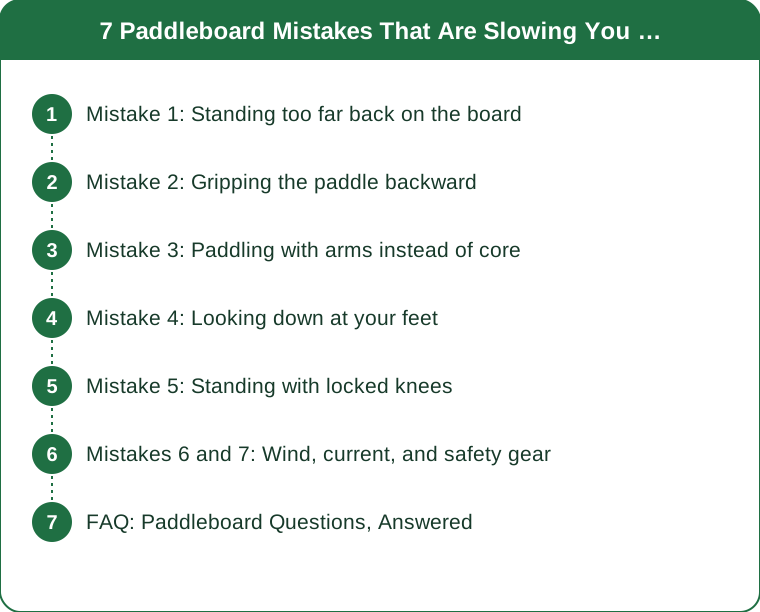
Mistake 1: Standing too far back on the board
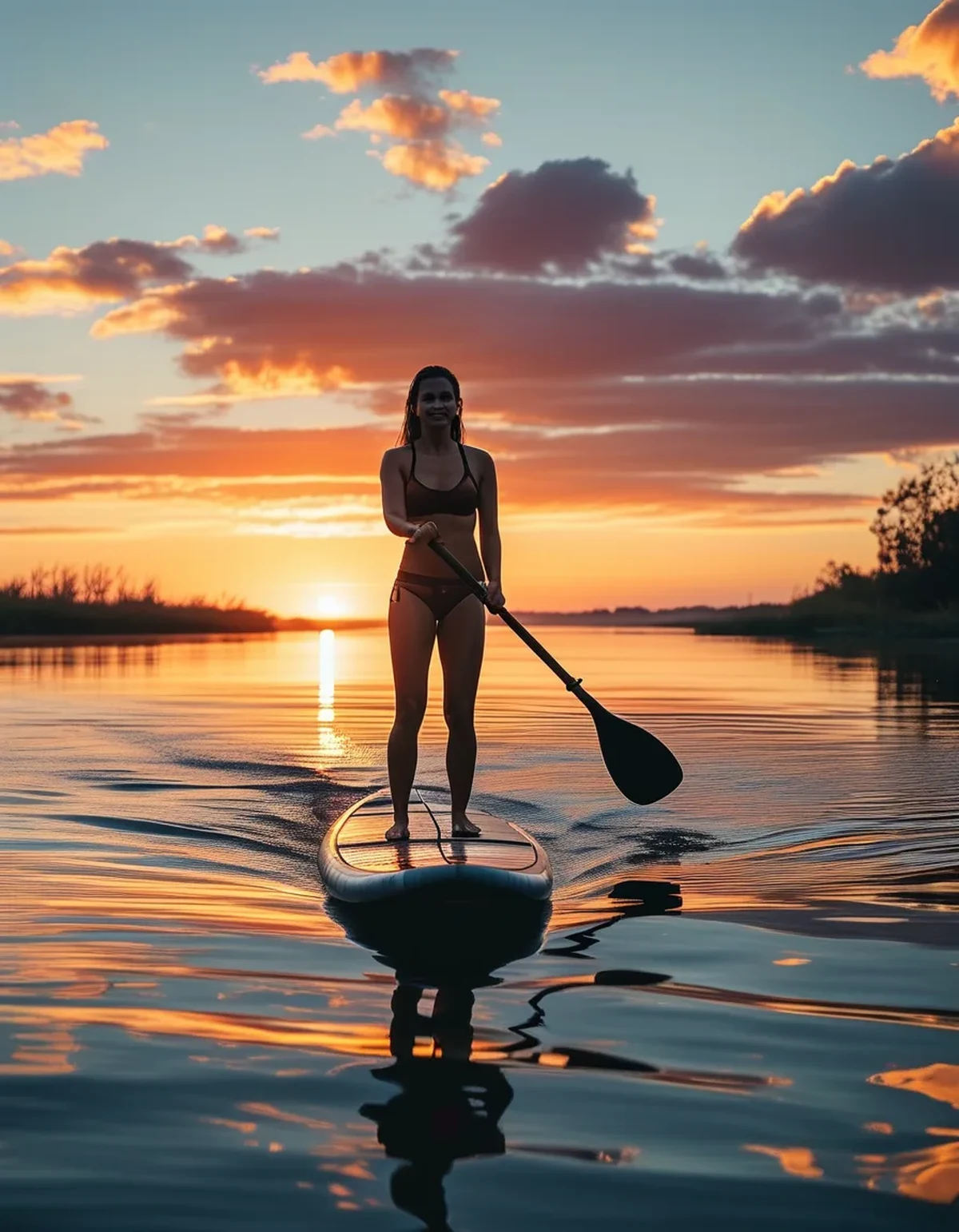
This tips the nose up and makes the board harder to track straight. Stand at the board’s center point, usually marked by the carry handle — your weight should be centered front to back, not favoring the tail.
Mistake 2: Gripping the paddle backward
The blade should angle forward at the top, away from you, when the paddle is planted. A backward grip feels almost identical but costs real efficiency on every stroke — check the angled edge of the blade before you push off.
Mistake 3: Paddling with arms instead of core
Arm-only paddling gasses you out in 10 minutes. The power should come from rotating your torso, using your arms mainly to hold the paddle position while your core does the work — this is the single biggest efficiency fix available.
Mistake 4: Looking down at your feet
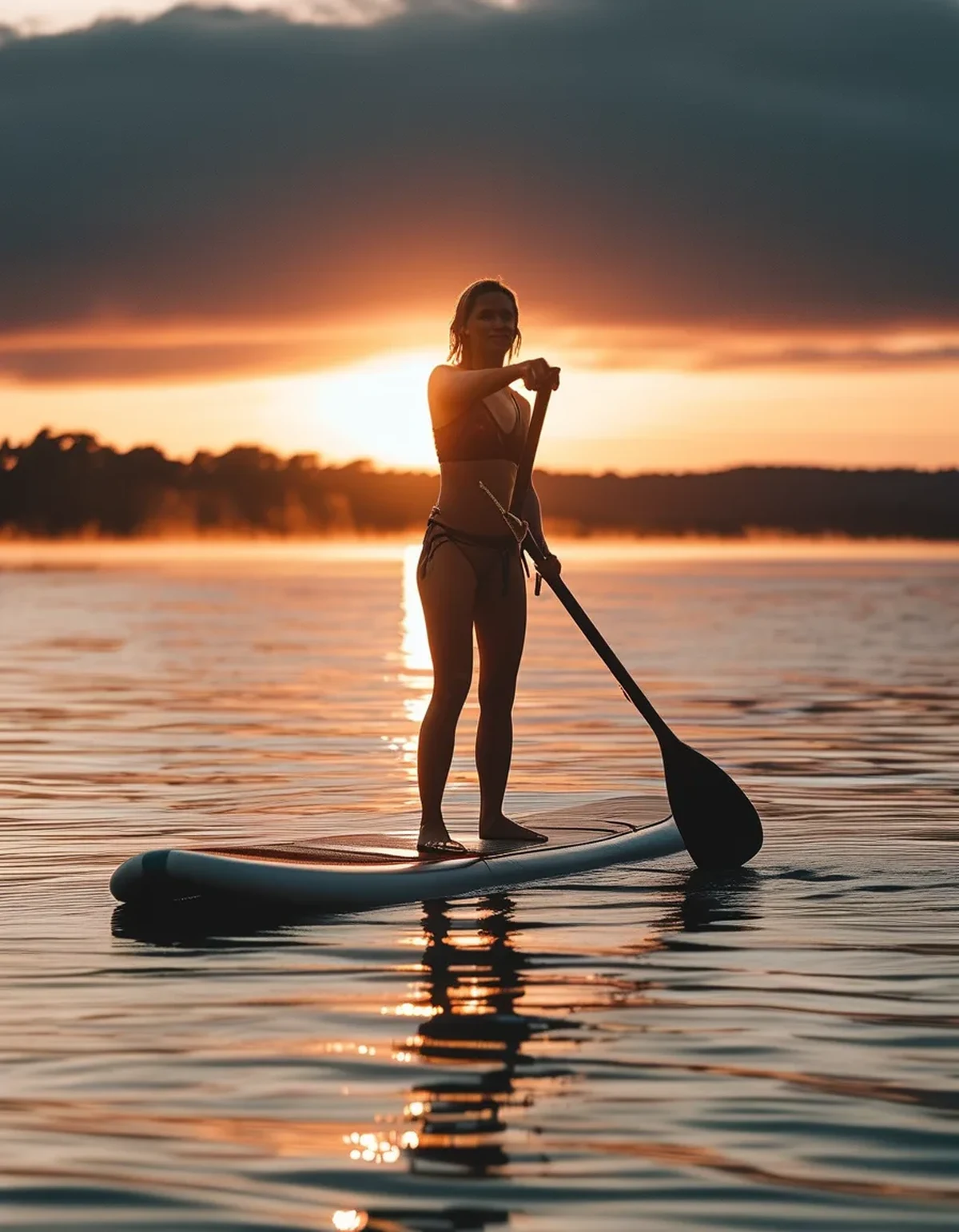
Looking down shifts your center of gravity and actually makes you less stable, not more. Look at the horizon — your balance system works better with a fixed distant reference point than a moving one at your feet.
Mistake 5: Standing with locked knees
Locked knees turn every small wave or wobble into a full-body event. Soft, slightly bent knees act as shock absorbers and are the difference between staying up and going in.
Mistakes 6 and 7: Wind, current, and safety gear
Mistake 6: Ignoring wind and current before launching
Paddling out with a tailwind feels effortless — then you’re fighting a headwind exhausted on the way back. Check wind direction before launch and paddle into it first while you’re fresh.
Mistake 7: Skipping a leash and PFD
A board separated from you in wind or current becomes a real safety issue fast. A leash and a proper PFD aren’t optional extras — they’re the difference between an inconvenience and an emergency.
FAQ: Paddleboard Questions, Answered
How long does it take to get comfortable paddleboarding?
Most people find stable footing within 1-2 sessions once foot position and knee bend are corrected — full technique comfort takes 4-6 outings.
Should beginners kneel or stand?
Starting on your knees to get a feel for balance is fine, but standing sooner rather than later actually builds better balance faster than staying seated too long.
What water conditions are best for beginners?
Calm, flat water with minimal wind — lakes or protected bays — are far easier to learn on than anything with waves or strong current.
TL;DR:
- Fix foot position, paddle grip, and core rotation first — biggest impact
- Look at the horizon, not your feet, for better balance
- Keep knees soft, check wind before launching
- Always use a leash and PFD
Most paddleboard struggle is 7 fixable habits, not a lack of natural balance.
Keep Reading
This article is for general informational and styling purposes only. Fit, sizing, and product availability may vary.