7 Paddleboard Mistakes That Slow You Down Without You Noticing
Quick Answer: The most common speed-costing paddleboard mistakes are gripping the paddle too far apart, paddling with the arms instead of rotating the torso, and standing with feet too far apart — all three reduce power transfer per stroke, meaning more effort for less actual forward speed.
None of these seven mistakes look dramatic from shore. On the water, each one is quietly taking speed off every stroke.

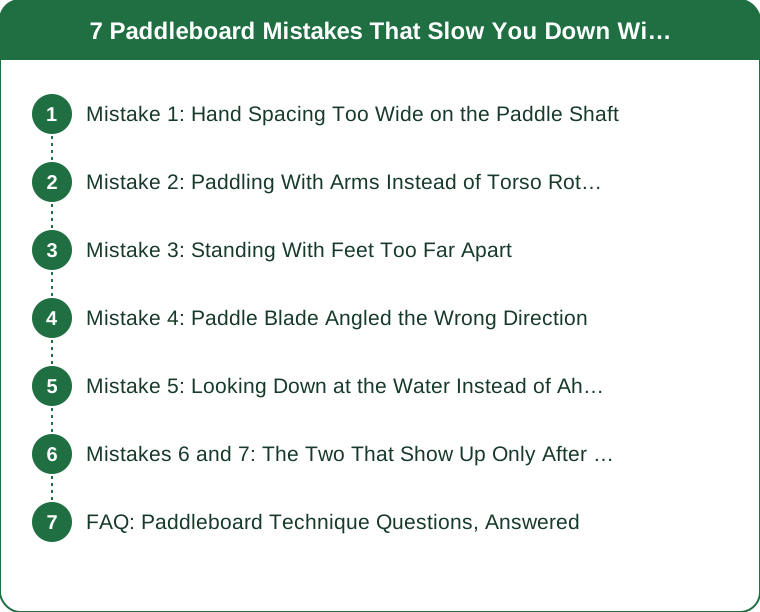
Mistake 1: Hand Spacing Too Wide on the Paddle Shaft
Gripping the paddle with hands too far apart reduces leverage and power transfer through each stroke, making the same effort produce less forward propulsion than a properly spaced grip would.
Mistake 2: Paddling With Arms Instead of Torso Rotation
Relying mainly on arm strength instead of rotating the torso wastes the larger, more powerful core and back muscles, tiring the arms faster while leaving significant power on the table.
Mistake 3: Standing With Feet Too Far Apart
A wider-than-needed stance reduces the ability to rotate the torso freely through each stroke, directly undercutting the torso-rotation power that mistake two is trying to fix.
Mistake 4: Paddle Blade Angled the Wrong Direction
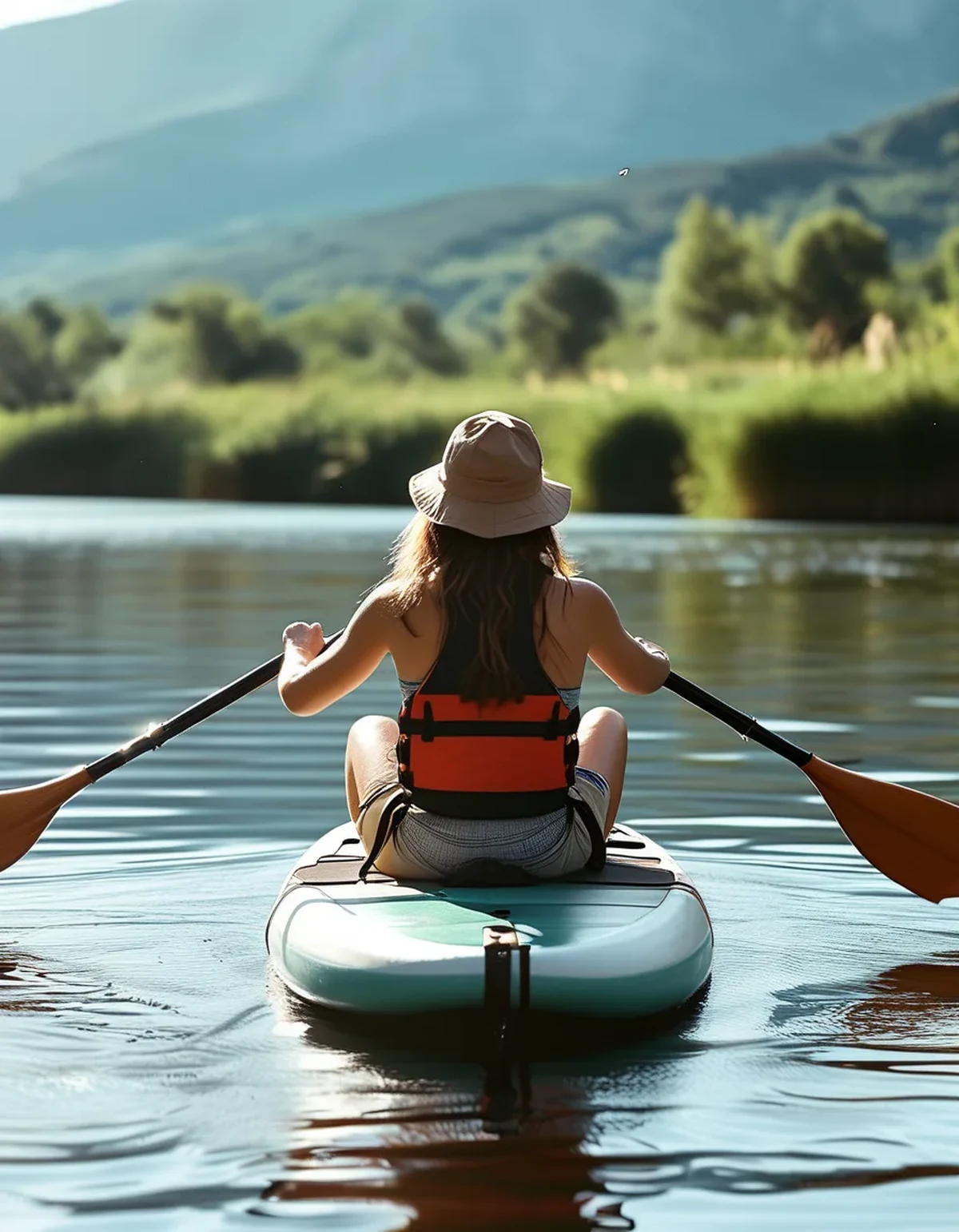
Paddling with the blade’s angled face pointed backward rather than forward reduces the blade’s actual catch and pull efficiency in the water, a common and easy-to-miss setup error.
Mistake 5: Looking Down at the Water Instead of Ahead
Looking down shifts body weight and balance forward in a way that subtly reduces paddling efficiency and increases wobble — keeping the gaze on the horizon supports better overall stroke mechanics.
Mistakes 6 and 7: The Two That Show Up Only After Fatigue
Mistake 6: Shortening the Stroke as Arms Tire
A shortening stroke length as fatigue sets in quietly reduces distance covered per stroke, adding more strokes for the same distance and accelerating fatigue further.
Mistake 7: Ignoring Core Bracing Through Choppier Water
Letting the core relax in choppier conditions costs both stability and power — active core bracing matters more, not less, once the water gets less calm.
FAQ: Paddleboard Technique Questions, Answered
Is torso rotation something beginners can learn quickly?
Yes — most paddlers notice a difference within a session or two of deliberately focusing on rotating from the core rather than pulling with the arms alone.
Does paddle length affect these mistakes?
Yes — an incorrectly sized paddle can make proper hand spacing and torso rotation harder to achieve regardless of technique awareness.
Should beginners worry about all seven mistakes at once?
No — focusing on hand spacing and torso rotation first typically produces the biggest efficiency improvement before addressing the smaller factors.
TL;DR:
- Hand spacing, torso rotation, and stance width are the three biggest efficiency levers
- Blade angle and gaze direction are smaller but still meaningful efficiency factors
- Stroke length and core bracing tend to break down specifically under fatigue
- Fixing hand spacing and torso rotation first produces the biggest early improvement
None of these seven mistakes require new equipment to fix — just a few sessions of deliberate attention to habits that are easy to build accidentally.
Keep Reading
This article is for general informational and styling purposes only. Fit, sizing, and product availability may vary.