7 Paddleboard Mistakes That Are Quietly Slowing You Down (And How to Fix Each One)
Quick Answer: The biggest speed and stability killers are standing too far back on the board, gripping the paddle backwards, and using arm strength instead of torso rotation — all three are fixable in a single session once you know what to look for.
You’re paddling hard but somehow not covering ground, and your board feels tippier than it should. Here are the 7 mistakes actually causing it.
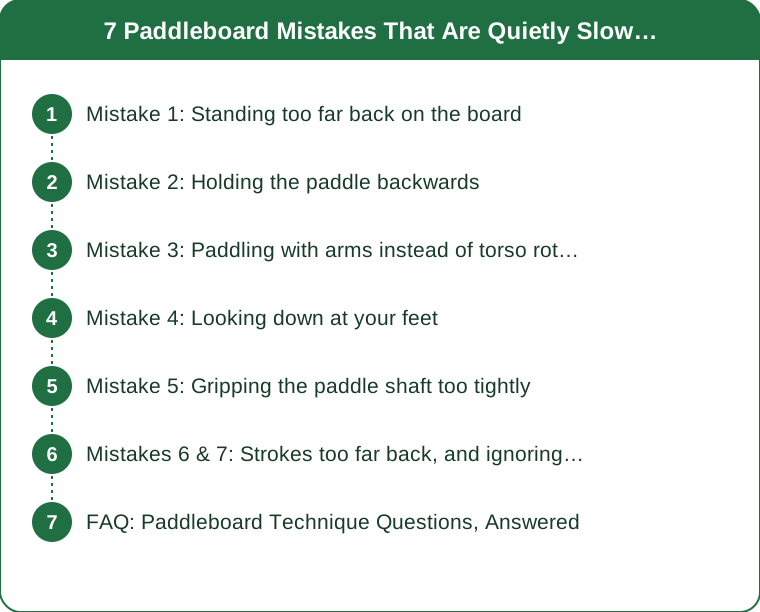
Mistake 1: Standing too far back on the board
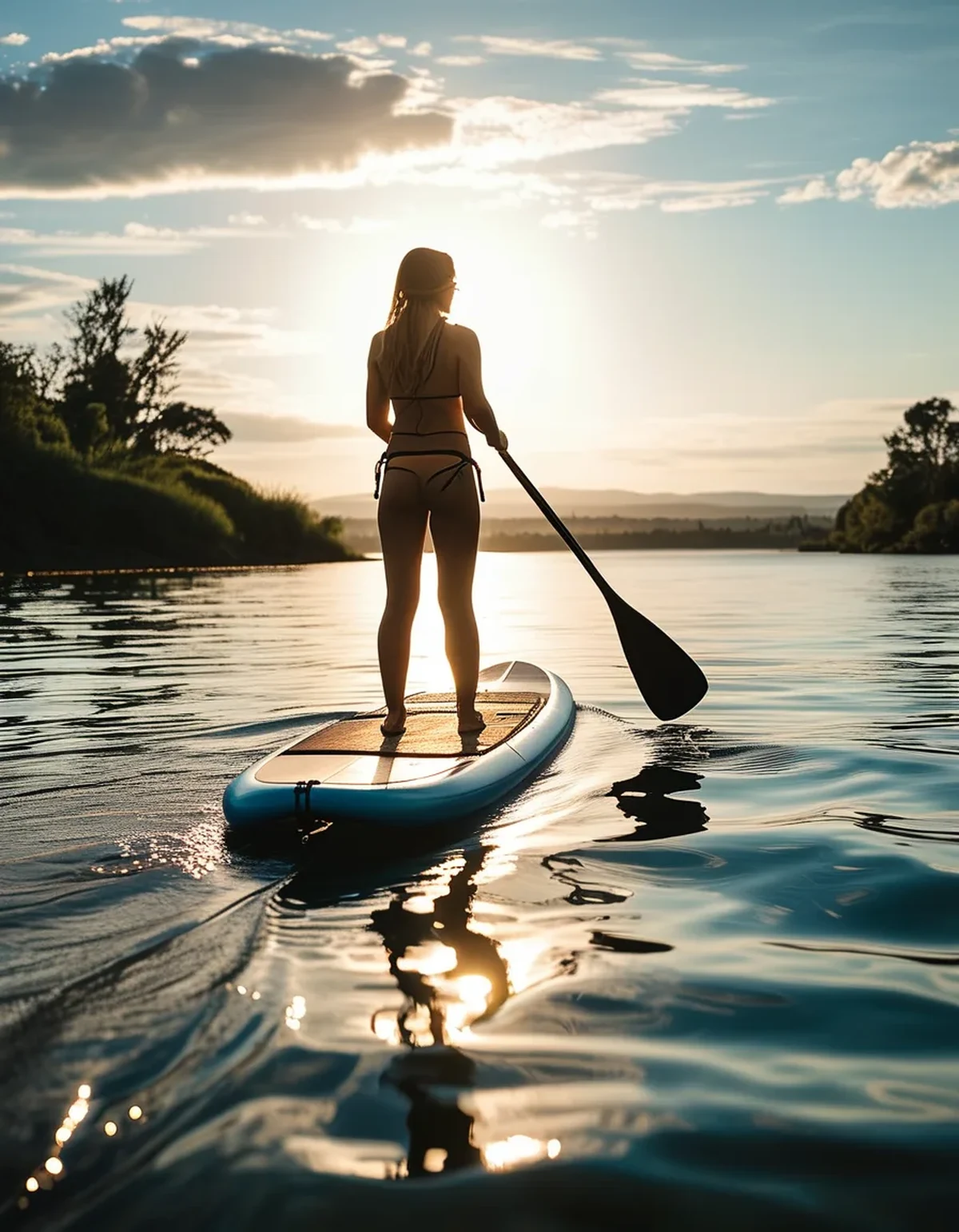
This is the single most common beginner error. Standing behind the board’s center point lifts the nose out of the water, which increases drag and hurts tracking rather than helping stability like people assume. Stand at the board’s midpoint, marked by the carry handle on most boards, and adjust forward slightly if the nose is riding high.
Mistake 2: Holding the paddle backwards
The blade should angle away from you at the top, not toward you — a surprisingly common reversal that cuts paddle efficiency noticeably. Check the logo or brand marking on the blade; it typically faces away from the paddler when held correctly.
Mistake 3: Paddling with arms instead of torso rotation
Arm-only paddling fatigues fast and generates less power per stroke. Rotate through your core and reach forward with your whole torso, not just your arm, then pull using back and core muscles — this is where real, sustainable paddle power comes from.
Mistake 4: Looking down at your feet
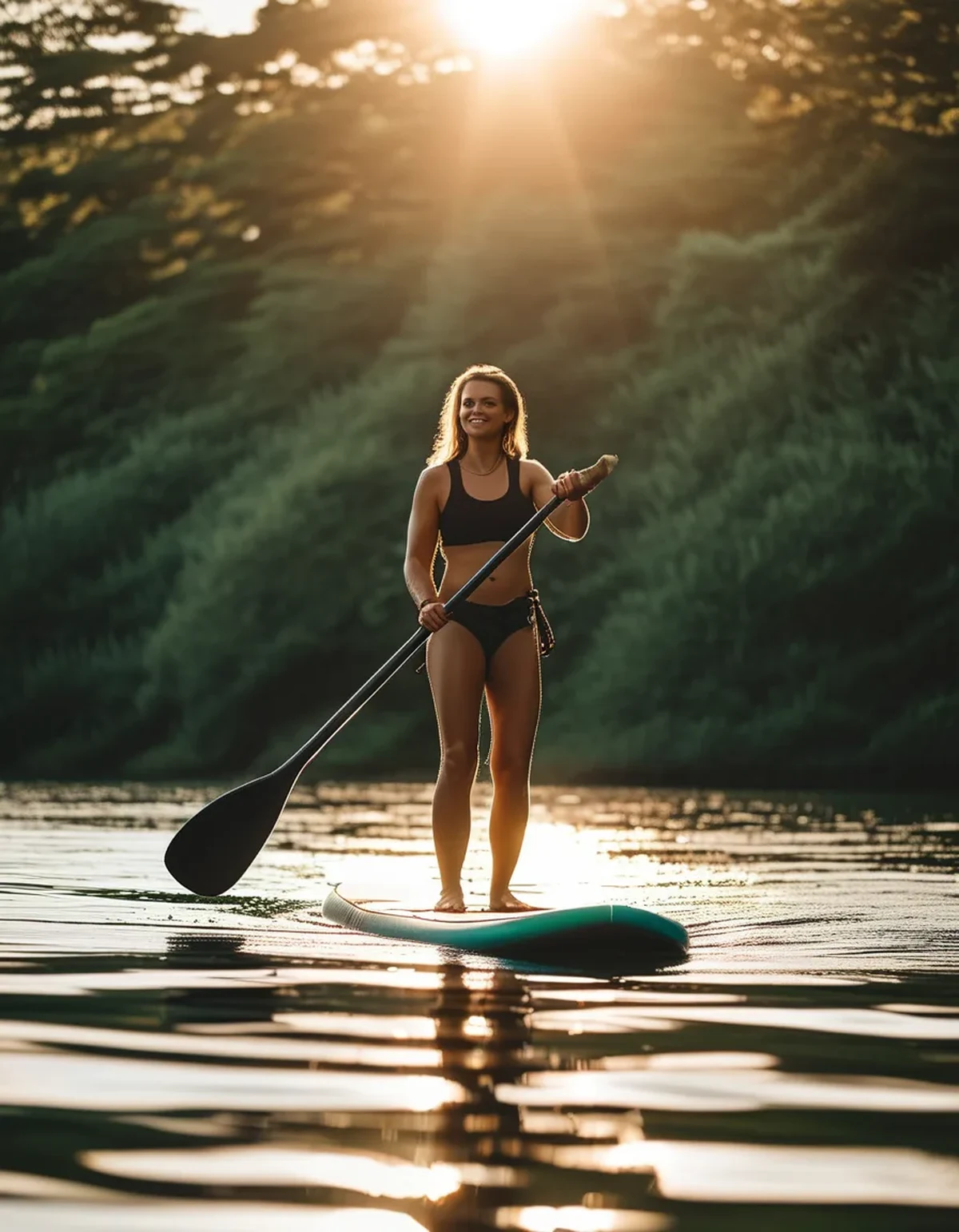
Looking down shifts your center of gravity and actually makes you less stable, not more — a counterintuitive but consistent finding among instructors. Fix your gaze on the horizon, the same balance principle used in skiing and cycling.
Mistake 5: Gripping the paddle shaft too tightly
An overly tight grip fatigues forearms fast and reduces the fluid wrist motion needed for an efficient stroke. A relaxed grip with the top hand loosely cupping the handle transfers power more efficiently over a long paddle session.
Mistakes 6 & 7: Strokes too far back, and ignoring wind direction
Taking strokes too far past the hip generates more lift than forward propulsion — essentially wasted effort. End each stroke at your ankle or hip, then lift the blade out cleanly rather than dragging it further back.
Ignoring wind and current direction at launch is the other common error — paddling out against wind/current first (when you’re fresh) and returning with it at your back (when you’re tired) is far easier than the reverse. Plan your route direction before launching, not after you’re already tired.
FAQ: Paddleboard Technique Questions, Answered
How long does it take to fix these habits?
Most paddlers notice a real difference within one to two sessions of consciously focusing on stance and paddle grip specifically.
Does board type change which mistakes matter most?
Stance position matters more on longer touring boards; grip and stroke length matter roughly equally across all board types.
Should beginners take a lesson or self-correct with guides like this?
A single lesson accelerates the process significantly, but self-correcting stance and grip using visual checks (like this list) works well for motivated beginners too.
TL;DR:
- Stand at the board’s midpoint, not toward the back — nose-up kills tracking
- Check paddle blade orientation — a backwards grip cuts efficiency fast
- Power comes from torso rotation, not arms — this is the biggest gain available
- End strokes at the hip and keep your gaze on the horizon, not your feet
Keep Reading
This article is for general informational and styling purposes only. Fit, sizing, and product availability may vary.