7 Paddleboard Mistakes That Tire You Out Way Too Fast
Quick Answer: Most early paddleboard fatigue comes from paddling with arms only, poor stance, or an incorrect paddle length — not low fitness.
If you’re gassed 15 minutes into a session that experienced paddlers handle for an hour, the fix is almost never ‘get in better shape’ — it’s one of these seven habits.
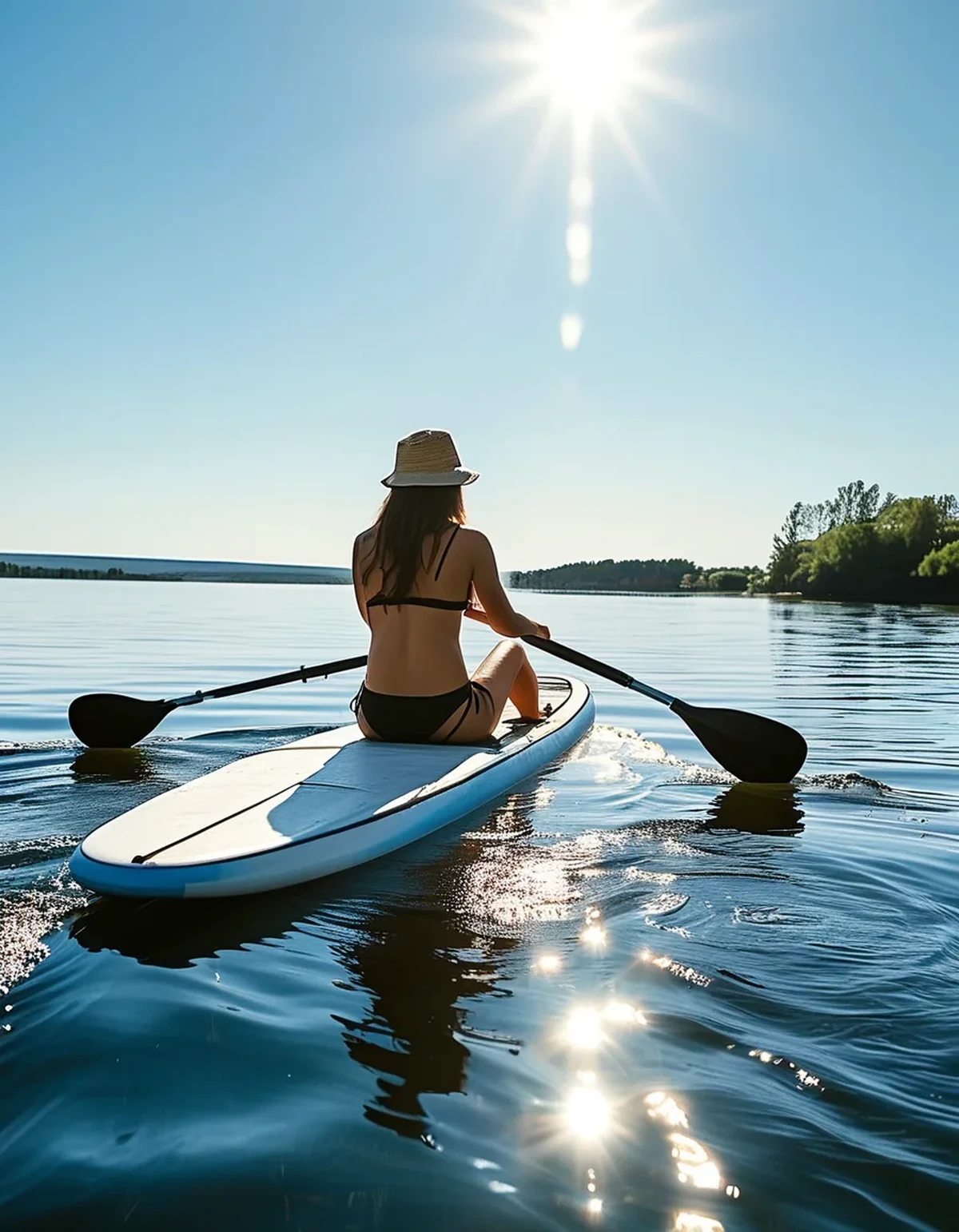
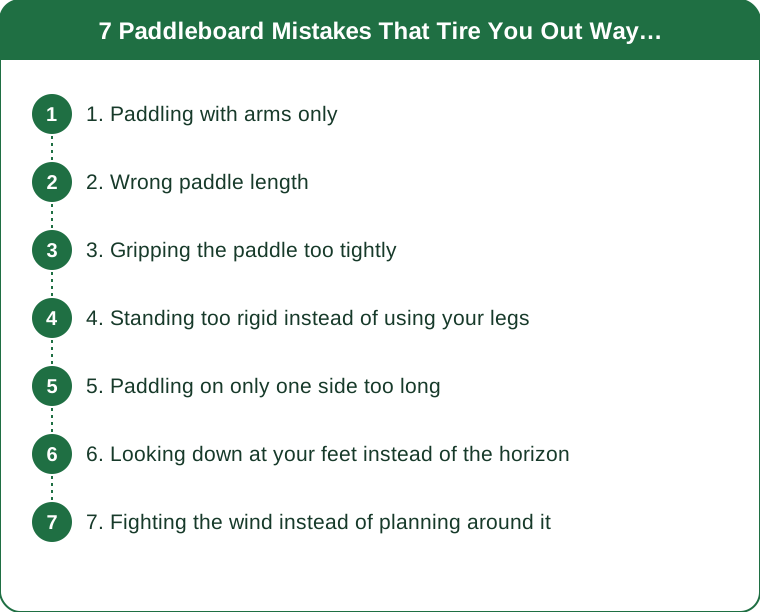
1. Paddling with arms only
Arm-only paddling burns through shoulder endurance fast because it’s the smallest muscle group doing all the work. Rotating from the torso and engaging your core on each stroke shifts the load to bigger, more efficient muscles.
2. Wrong paddle length
A paddle that’s too long or short forces an inefficient stroke angle, which wastes energy on every single pull. Standing paddle length should generally reach your wrist when your arm is raised overhead.
3. Gripping the paddle too tightly
A death-grip on the shaft tires your forearms long before your bigger muscles fatigue. A relaxed grip that firms up only during the power phase of the stroke conserves noticeable energy over a session.
4. Standing too rigid instead of using your legs
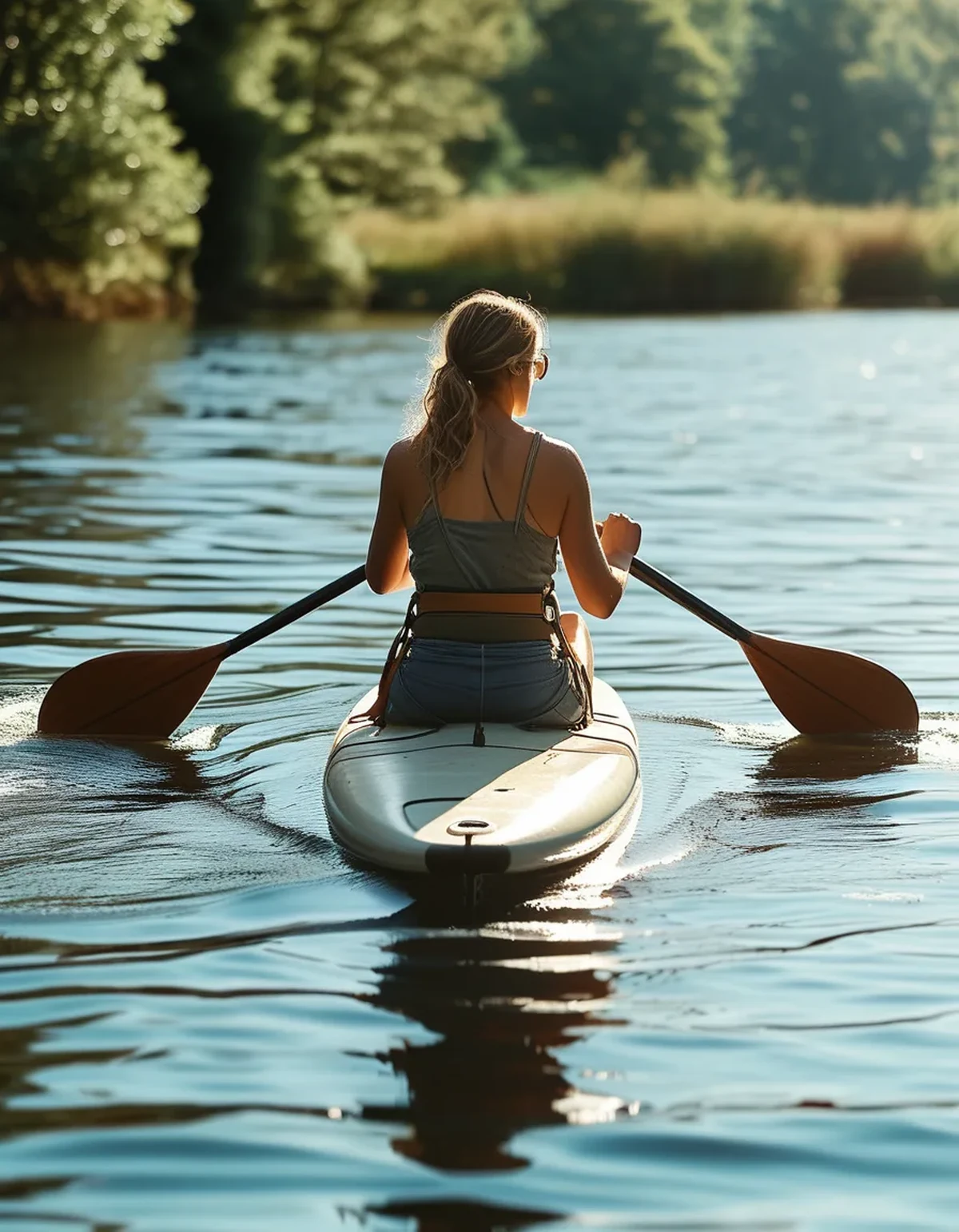
Locked knees transmit every bit of board wobble straight into your core, forcing constant micro-corrections that add up fast. Soft, slightly bent knees absorb chop and wobble, saving core energy for actual paddling.
5. Paddling on only one side too long
Sticking to one side to avoid switching hands causes the board to zigzag, which means you’re paddling extra distance to correct course. Switching sides every 4-6 strokes keeps the board tracking straighter and cuts wasted effort.
6. Looking down at your feet instead of the horizon
Looking down shifts your center of gravity forward and down, forcing constant balance correction. Keeping your eyes on the horizon naturally centers your posture and reduces the tiny stabilizing movements that drain energy.
7. Fighting the wind instead of planning around it
Paddling straight into wind on the way out, when you’re freshest, and returning with the wind at your back is far less tiring than the reverse — but a lot of beginners paddle out with the wind and exhaust themselves fighting it home.
TL;DR:
- Rotate from your torso, not just your arms
- Match paddle length to your height, and loosen your grip
- Soft knees absorb wobble instead of your core doing the work
- Switch paddle sides regularly, and paddle into the wind first
Fixing two or three of these in a single session usually adds real minutes to how long you can paddle comfortably — it’s rarely a fitness ceiling.
Keep Reading
This article is for general informational and styling purposes only. Fit, sizing, and product availability may vary.