7 Signs Your Paddle Length Is Wrong for Your Body and Board
Quick Answer: A paddle that is too long forces you to reach up, drops power, and loads the shoulders. A paddle that is too short makes you stoop, shortens the stroke, and loads the lower back. The classic starting point is roughly six to eight inches above your height for general paddling, less for surf and more for racing, but the correct length is the one where you can plant the blade fully with a straight lower arm and a tall spine. These seven symptoms tell you which direction to move, and an adjustable shaft makes testing it a five-minute job.
You set the paddle to whatever the shop suggested on day one, and it has not moved since.
Meanwhile you have changed boards, improved your technique, and started paddling further. Any one of those changes the correct length, and the symptoms below are how it announces itself.
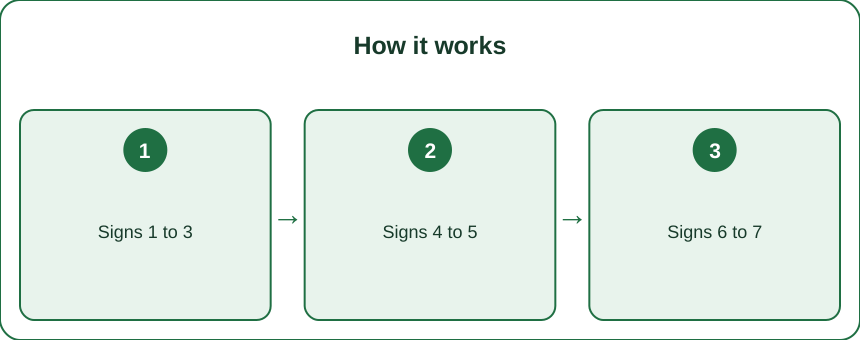
Signs 1 to 3: what a paddle that is too long feels like
1. Your top hand is above your head at the catch
At the front of the stroke, your top hand should finish roughly at forehead to eye level, not above the crown of your head. If you are reaching upward to plant the blade, the paddle is long. This costs you power because the force is being applied at a poor angle, and it fatigues the shoulder of the top arm quickly. It is the single clearest visual sign and the easiest to check with a phone video from the side.
2. Your shoulders burn long before your back or core does
A correctly sized paddle with reasonable technique loads the lats, back, and core. A long paddle shifts the work to the deltoids and rotator cuff, which are much smaller and fatigue much faster. If you finish a 45 minute paddle with sore shoulders and a fresh back, that is a length and technique problem rather than a fitness problem. Shoulder soreness that persists after sessions is worth taking seriously rather than training through.
3. The blade does not fully submerge on the catch
Watch the water at the front of your stroke. The entire blade should be underwater before you apply real force. With a long paddle, most people plant late and pull with the blade partly out, which produces splash, noise, and a distinctly inefficient sound. A fully buried blade is quiet. If your stroke is loud, shorten the paddle by two inches and listen again.
Signs 4 to 5: what a paddle that is too short feels like
4. You are bending at the waist rather than hinging from the hips
A short paddle forces you to stoop to reach the water. The spine rounds, the reach shortens, and the load lands on the lower back rather than the core. This is the most common cause of lower back soreness after paddling, and it is frequently misattributed to a weak core. If your back is the first thing to complain, check the length before you buy a core programme. Stand tall, hinge from the hips, and if you cannot reach the water in that position, the paddle is short.
5. Your stroke rate is high and your board is slow
A short paddle produces a short stroke, and a short stroke means more strokes for the same distance. If you feel like you are working hard, moving your arms constantly, and being overtaken by someone paddling at a visibly relaxed cadence, length is a likely contributor. A useful check is counting strokes over a fixed distance on flat water on two different settings a few days apart. Two inches often changes the count noticeably.
Signs 6 to 7: the ones that appear only over distance
6. Your technique falls apart after 30 minutes but is fine at the start
A slightly wrong length is manageable while you are fresh, because you compensate. As you fatigue the compensation stops, and the errors appear. This is why length problems are frequently missed in short test paddles and only show up on a real outing. If your first twenty minutes look nothing like your last twenty, and this blog has covered how balance and grip both degrade the same way, length is one of the underlying causes rather than a separate issue.
7. You paddle noticeably better on one side than the other
A wrong length exaggerates any existing asymmetry, because the compensation you make on your dominant side is more effective than the one on your weaker side. Paddlers with a persistent tendency to veer, or who need far more strokes on one side to hold a line, often find the asymmetry shrinks when the length is corrected. It rarely disappears entirely, since some of it is genuine, and the change is usually obvious.
How to find the right length in one session
Use an adjustable shaft and test rather than trusting the chart.
Start from the chart, then treat it as a hypothesis. Common starting points, measured from the floor to the top of the handle:
- All-round and touring: roughly 6 to 8 inches above your height
- Racing and long distance: roughly 8 to 10 inches above your height
- Surf: roughly 4 to 6 inches above your height, since a shorter paddle suits quick strokes and lower stances
- Yoga and fitness paddling: at the shorter end, since much of the session is not spent paddling
Then adjust from what you actually see. Two things override the chart entirely:
- Board thickness and how much you sink it. A thick board sits you higher above the water, which effectively requires a longer paddle. A lightweight paddler on a thick board frequently needs more length than the chart suggests, and a heavier paddler on the same board needs less.
- Your technique. As technique improves, most paddlers move toward a shorter paddle, because a proper hip hinge and torso rotation reach the water more effectively than a long reach with the arms did.
The five-minute test. On flat water, paddle 200 metres at each of three settings two inches apart, counting strokes and noting where you feel it. The correct setting is the one where the count is lowest and the effort is in your back and core, not your shoulders.
Repeat it seasonally. Length that suited you in spring may be wrong by autumn if your technique or fitness has changed, and it is a two-minute check rather than a project.
FAQ: Paddle Length Questions, Answered
How long should my SUP paddle be?
A common starting point is 6 to 8 inches above your height for all-round paddling, shorter for surf and longer for racing. Treat that as a starting hypothesis and adjust based on board thickness and how the stroke actually feels.
Why do my shoulders hurt after paddleboarding?
Most often because the paddle is too long, so the top hand goes above head height and the stroke is powered by the deltoids instead of the back and core. Shortening by two inches frequently resolves it. Persistent shoulder pain is worth a professional opinion. This is general information, not medical advice.
Should I shorten my paddle as my technique improves?
Usually yes, by a small amount. Better hip hinge and torso rotation reach the water more effectively than a long-armed reach did, so most paddlers drift shorter over their first year or two.
TL;DR:
- Too long: top hand above your head, shoulders burning, blade not fully buried, splashy stroke.
- Too short: stooping at the waist, sore lower back, high stroke rate with little speed.
- Wrong either way: technique collapses after 30 minutes, and one side works noticeably better than the other.
- Start from the chart, then test three settings over 200 metres each and pick the one where the effort lands in your back rather than your shoulders.
Check your top hand height on a phone video from the side. It takes one minute and answers most of this.
Keep Reading
This article is for general informational and styling purposes only. Fit, sizing, and product availability may vary.