7 Wind Mistakes That Turn an Easy Paddle Into a Two-Hour Fight
Quick Answer: The dominant wind mistake is starting downwind, because the outbound leg feels effortless and the return leg becomes a headwind grind at the exact point you are most tired. Always paddle into the wind first. The other six mistakes are stance height, board volume, fin choice, paddle angle, hugging the wrong shore, and misreading gust timing.
A board that felt easy in July can feel unrideable in a 12-knot afternoon breeze. The board did not change. Here are the seven things that actually did.
1. Starting downwind because it feels good
This is the mistake that generates rescue calls, and it is entirely a psychology problem.
A downwind start is delicious. You glide, you barely paddle, you cover distance fast, and you feel strong. Then you turn around 45 minutes out with tired shoulders and discover you are pushing into a wall of moving air, on water that is now choppy, at a fraction of the speed.
Rule: the first leg is always into the wind. Every time, without exception, even when it feels wrong. You spend your freshest energy on the hardest half and get a free ride home. If you get tired earlier than planned, the wind carries you back rather than trapping you.
If you are not sure which way it is blowing, watch the surface texture, not the flags on shore. Shoreline flags are lying to you about what happens 200 meters out.
2. Standing tall when you should be kneeling
Your body is the sail. That is not a metaphor, it is the actual physics of the situation.
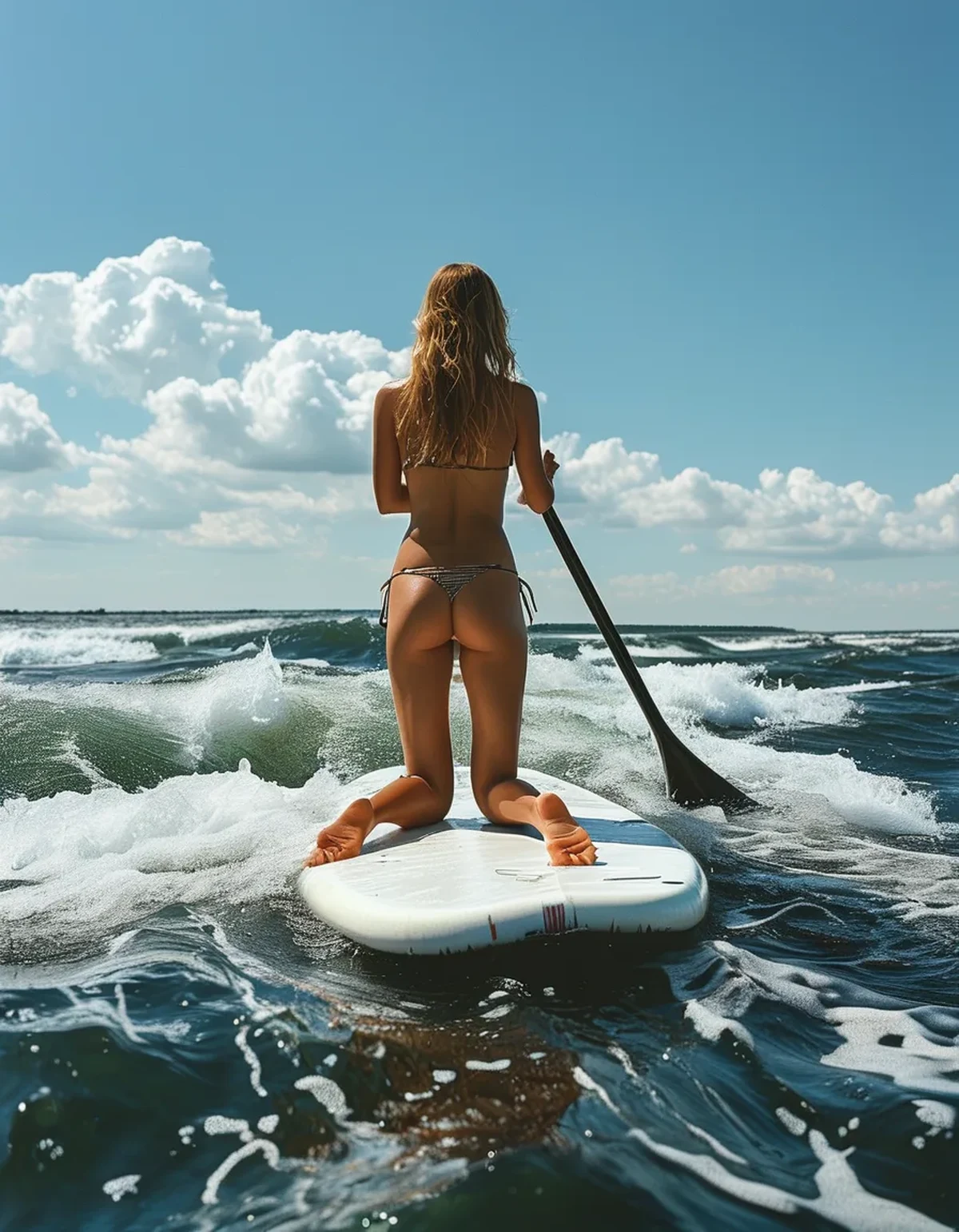
A standing adult presents roughly six to eight square feet of surface to the wind. Kneeling cuts that by more than half and drops your center of gravity at the same time, which matters because chop and wind arrive together.
The error is treating kneeling as a failure state. Experienced paddlers drop to their knees the moment the wind picks up, not when they start falling. Kneeling is a gear, not a retreat.
When you do stay standing in wind, bend the knees more than feels necessary and keep your torso slightly forward. An upright, locked-leg stance is both the least stable and the most wind-exposed position available.
3. Blaming your technique when it is board volume
A board that is too large for your weight sits high in the water and behaves like a sail on a hinge.
Volume that is generous for a calm morning becomes a liability in wind because more of the board is above the waterline for the air to push against. This is why a lighter paddler on a big all-round board struggles in conditions that a heavier paddler on the same board handles fine.
If you consistently get pushed sideways, the honest check is your weight against the board’s recommended range. Sitting in the top third of that range is the comfortable place for windy water. Sitting at the very bottom of it means you will be fighting.
Nothing about your stroke fixes a board that is riding too high.
4. Ignoring the fin and 5. Paddling with a high angle
4. The fin setup is doing more than you think
A short or worn center fin lets the tail slide out in crosswind, which shows up as constant corrective strokes on one side. A longer fin tracks noticeably better in wind at a small cost in maneuverability, and that is the right trade for open water.
Check that the fin is fully seated and the screw is tight before you launch. A partially seated fin is a surprisingly common cause of mysterious tracking problems.
5. Your paddle is catching air
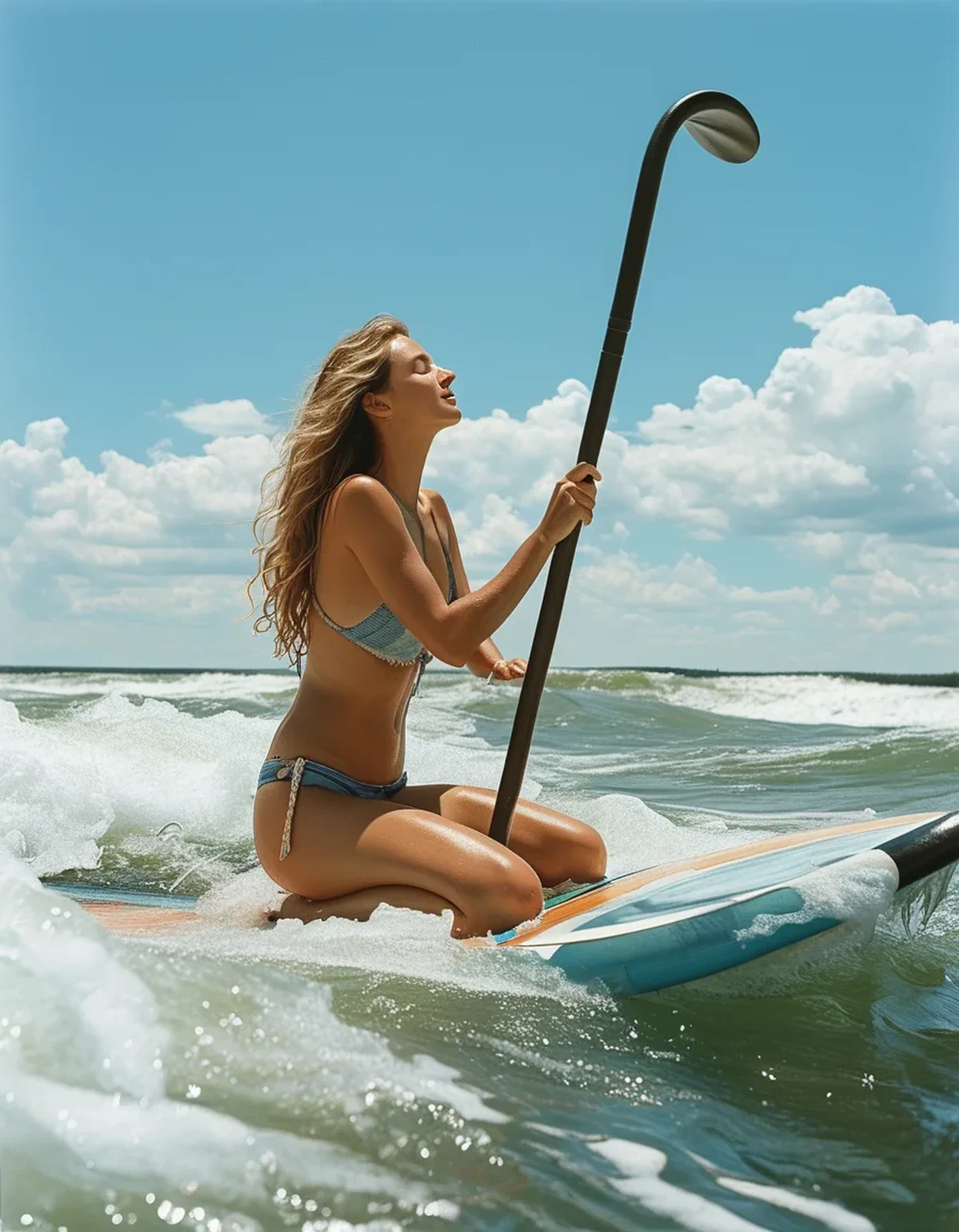
A high, vertical recovery in wind means the blade is a small sail on every stroke, and in a real breeze you will feel it push your arm back. Keep the recovery low and slice the blade forward close to the water.
Shorten the stroke as well. Long reaching strokes are efficient in calm water and inefficient in chop, because the blade repeatedly grabs nothing when the surface drops away. Short, quick, low beats long and elegant once the water is textured.
6. Hugging the wrong shore and 7. Misreading the gust pattern
6. Pick the shore the wind is coming from
Water near the windward shore is protected and flatter, because the wind has not had distance to build waves. Water near the lee shore looks calm from land and is not.
More importantly, if something goes wrong, wind that pushes you toward shore is your friend. Wind that pushes you away from it is the entire problem. Set up so a failure drifts you toward land.
7. Afternoon gusts are not random
On most lakes and coastal spots, thermal wind builds through the day and peaks mid to late afternoon. Morning water is reliably calmer, which is why serious paddlers are on the water at seven and off it by eleven.
Check the hourly forecast rather than the daily average. A day listed at 8 knots frequently means 4 knots at 8am and 15 knots at 3pm, and those are two completely different sports.
Also learn the gust interval where you paddle. Most spots have a rhythm, often 30 to 90 seconds between pushes. Paddle hard in the lull, hold position low in the gust, and repeat. Fighting the gust itself burns enormous energy for almost no distance.
FAQ: Paddleboarding in Wind Questions, Answered
At what wind speed should I just not go?
For most recreational paddlers, above 12-15 knots on open water is where the day stops being fun and starts being a workout with consequences. Below 8 knots is comfortable. Between them, stay close to a windward shore and shorten the plan.
Is a leash more or less important in wind?
Far more. A board separated from you in wind moves faster than you can swim. That is the single most dangerous scenario in the sport, and the leash is what prevents it. Wear it on every windy session without debating it.
Should I use a shorter paddle in wind?
Slightly, yes. Dropping two to four centimeters from your calm-water length encourages the lower, quicker cadence that works in chop, and reduces how much blade is exposed on the recovery.
TL;DR:
- Always paddle into the wind first so the tired half is the easy half
- Kneel early; your body is the largest sail on the board
- Board volume, fin length, and a low paddle recovery matter more than stroke quality in wind
- Favor the windward shore, and go in the morning before thermal wind builds
None of these require better fitness. They require the decision you make in the parking lot, before you touch the water.
Keep Reading
This article is for general informational and styling purposes only. Fit, sizing, and product availability may vary.