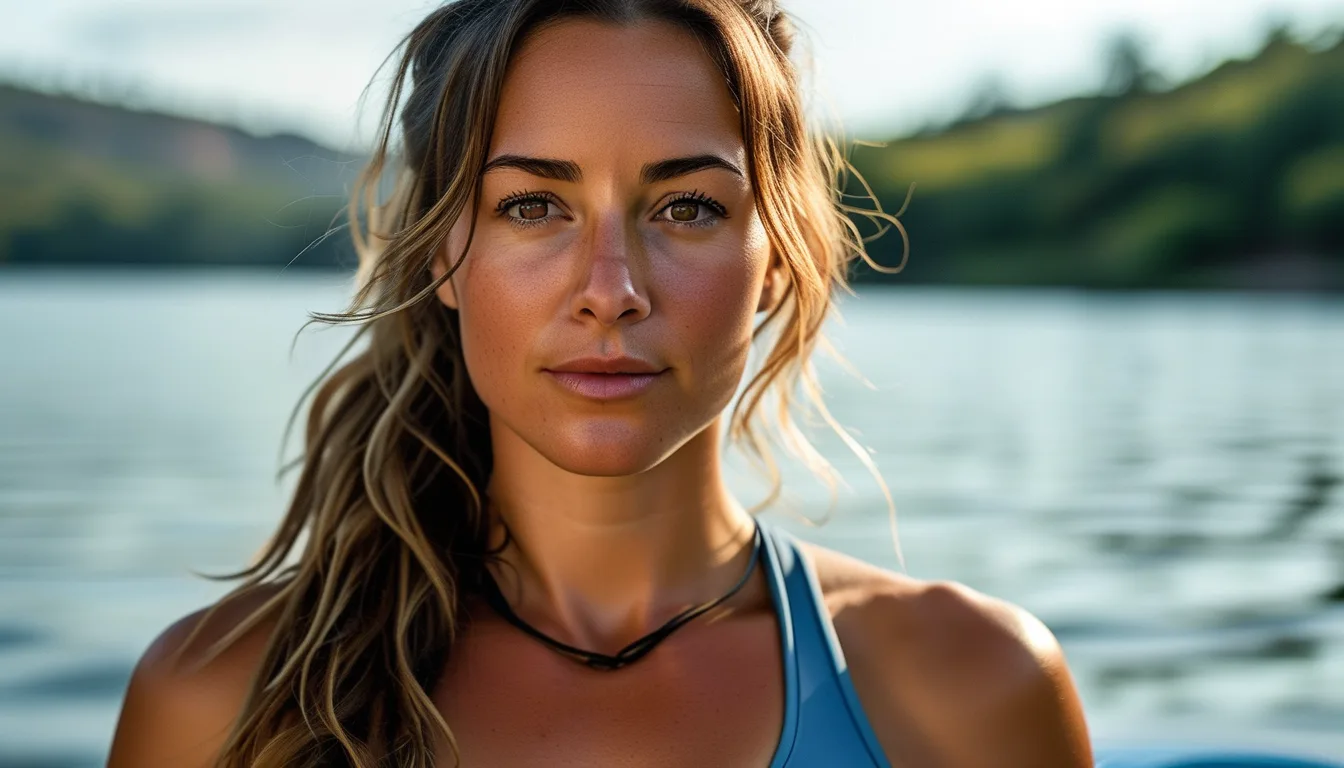
Stand-Up Paddleboarding for Beginners: Calm Water, Full-Body Workout
Quick Answer: Start on a board that’s at least 10’6” long and 32 inches wide — width is what makes it stable — on flat water with wind under 10 mph. Begin kneeling, take a few strokes, then stand one foot at a time while looking at the horizon, never at your feet. Most beginners are standing and paddling within 20 minutes. An easy hour burns roughly 300–450 calories and works your core the entire time.
From shore, stand-up paddleboarding looks like a lazy float.
Then you get on the board and discover that your feet, ankles, and core are holding an extremely intense committee meeting that will continue for the next ninety minutes. SUP is a full-body balance workout wearing a vacation disguise — and it’s one of the fastest water sports to get genuinely competent at. One calm morning is usually all it takes.
Is Paddleboarding a Good Workout?
Better than it looks, and different from what you’d guess.
The core works continuously. Every second you’re standing, your feet, ankles, and deep abdominals are making constant micro-adjustments against the water’s movement. It’s essentially a plank you don’t notice, because you’re busy looking at the scenery. People routinely report core soreness the next day from what felt like a gentle paddle.
The stroke is a back and core exercise, not an arm one. Done correctly, the power comes from rotating your torso — your arms mostly hold the paddle in place. Paddlers who use their arms tire out in twenty minutes; paddlers who rotate go for hours.
Calorie burn: roughly 300–450 per hour for casual paddling, comparable to a brisk walk or easy cycling. Push into faster paddling or choppy water and that climbs considerably.
It’s low-impact. Nothing pounds, nothing compresses. Which makes it a genuinely good option if running or high-impact classes bother your joints.
What Size Paddleboard Should a Beginner Get?
Bigger is more stable. Full stop.
- Length: 10’6” or longer. Longer boards track straighter and are more stable fore-and-aft.
- Width: at least 32 inches. This is the number that actually determines whether you fall in. Width is stability. A 30-inch board is noticeably twitchier than a 32-inch one, and racers who use 26-inch boards have spent years earning that.
- Thickness: 6 inches for inflatables, so the board doesn’t flex under you.
Inflatable vs. hard board: for most beginners, inflatable wins. It’s rigid enough when properly inflated (12–15 PSI — under-inflating is the single most common cause of a “wobbly” board), it stores in a closet, it survives being dropped, and it’s much more forgiving when you land on it.
Paddle length: roughly 8–10 inches taller than you. A paddle that’s too short forces you to hunch, which wrecks both your back and your stroke.
Rent for the first two or three outings. Rental shops on any lake or bay will set you up for $25–40 and often give a free five-minute lesson, which is worth more than any article.
Always bring: the leash (it’s your flotation device — a board blown away from you is the actual danger in SUP), a legally required PFD, and a phone in a dry bag. Check the wind: under 10 mph for beginners, and be honest about it.

How Do You Stand Up on a Paddleboard?
The sequence, and there is a correct one:
- Start kneeling in the center of the board, just behind the handle, with the paddle laid across the deck in front of you.
- Take a few kneeling strokes. Get a feel for how the board responds. Don’t skip this — moving water is more stable than still water, and having a little forward momentum makes standing far easier.
- Hands on the deck, either side of the board.
- One foot at a time into the spot where each knee was — this is the board’s balance point.
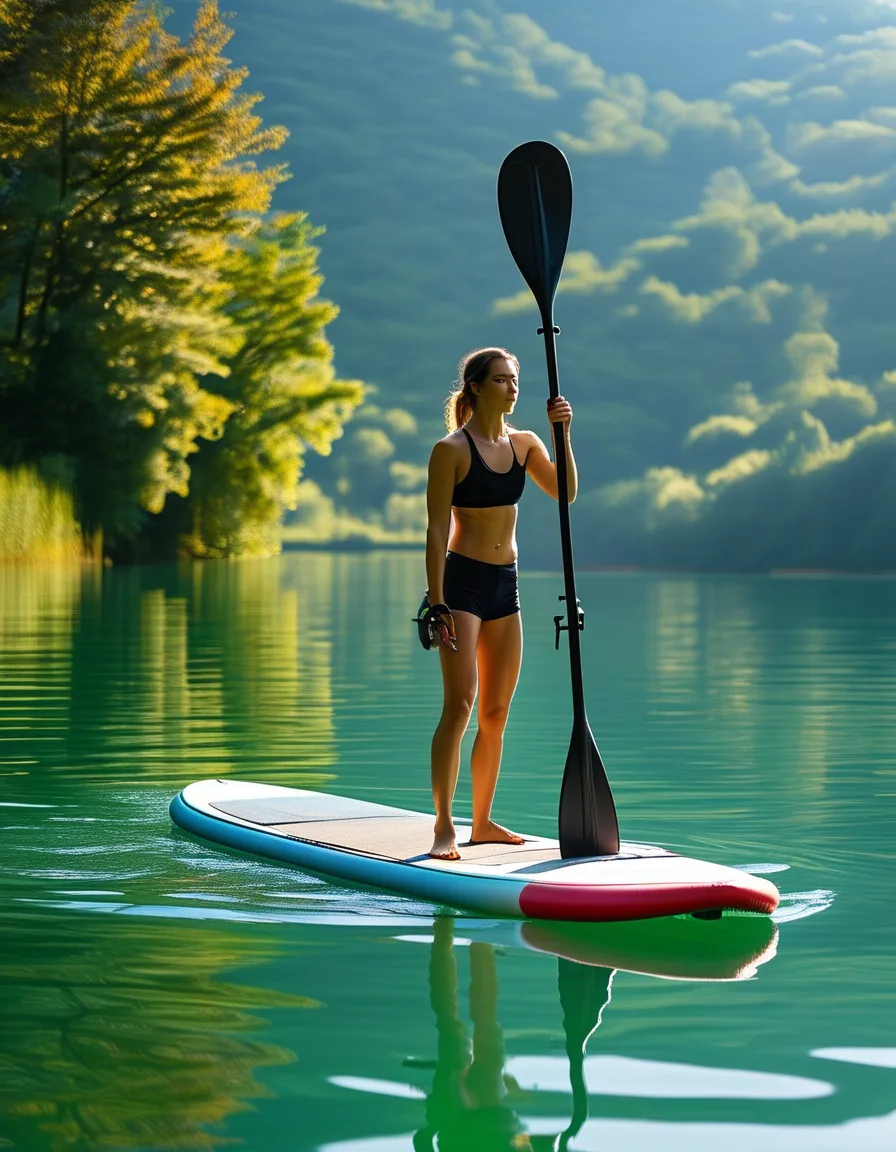
- Rise slowly, looking at the horizon. This is the whole trick. Looking down at your feet is where balance goes to die, every single time.
- Feet parallel, hip-width apart, knees soft. Bent knees act as shock absorbers. Locked knees transmit every wobble straight into your torso.
Wobbling is normal and it’s productive — that’s your stabilizers learning. It settles within about ten minutes.
When you fall — and you will — fall flat and away from the board rather than onto it. Water is soft; fiberglass is not. Climb back on from the center, on your belly, then get to your knees.
The Paddle Stroke (and the Mistake Everyone Makes)
The paddle blade angles away from you, not toward you. The logo faces forward. This looks wrong to roughly 90% of first-timers and it’s correct — the angle is designed to keep the blade vertical through the power phase.
The stroke:
- Reach forward and plant the blade fully in the water near the nose of the board
- Pull by rotating your torso — the same motion as turning to check a blind spot. Your arms stay relatively straight.
- Exit at your feet. Pulling past your feet just lifts water and wastes energy.
- Switch sides every 4–5 strokes to track straight
Bottom hand low on the shaft, top hand on the grip. Long unhurried strokes beat frantic splashing — in paddling and, arguably, in most things.
5 Mistakes Beginners Make
- Under-inflating the board. A soft inflatable flexes in the middle and feels impossibly unstable. Pump to 12–15 PSI and check the gauge. This fixes more “I can’t balance” problems than any technique advice.
- Looking down. Eyes on the horizon. Every time you look at your feet, you lose the balance you had.
- Standing too far back. Your feet go where your knees were — the board’s center. Stand too far back and the nose lifts, killing your tracking.
- Paddling with the blade backwards. Logo forward, blade angling away. Everyone gets this wrong at first.
- Ignoring the wind. SUP is a giant sail with a person attached. Always paddle out into the wind and home with it — the reverse leaves you exhausted with a headwind between you and shore. This is the mistake that turns a nice morning into a rescue call.
Where SUP Takes You Next
Standing gets boring faster than you’d expect — usually by outing three. Then it branches:
- Sunrise flat-water paddles on glass. Genuinely outperforms any meditation app.
- SUP yoga for the brave and the amused.
- Paddle picnics with a dry bag and a beach only reachable by water.
- Gentle river runs once you can handle a little current.
- Distance and fitness paddling, which is where the real cardio lives.
It travels well too — rental boards exist wherever water does. Quick-dry leggings and a secure top are the uniform. A sense of humor about falling in remains mandatory equipment.
Mini FAQ
Do you need to be fit to paddleboard?
No. Flat-water paddling is genuinely accessible to most fitness levels, and you can kneel or sit the whole time if standing feels like too much. Balance improves with practice far faster than fitness does — most people are meaningfully steadier by their third outing.
Is paddleboarding hard for beginners?
Easier than it looks, on the right board. On a wide (32”+), properly inflated board in calm water, most beginners are standing and paddling within 20 minutes. Almost every “SUP is too hard” story traces back to a board that was too narrow, under-inflated, or attempted in wind.
What should you wear paddleboarding?
Quick-dry, fitted athletic clothing — leggings and a secure top work perfectly. Avoid cotton, which stays wet and cold. Add reef-safe sunscreen (water reflects a lot of UV), sunglasses on a strap, and a hat. In cooler water, a wetsuit or neoprene top.
TL;DR
- Board: 10’6”+ long, 32”+ wide. Width is stability. Inflate to 12–15 PSI.
- Kneel first, paddle a bit, then stand one foot at a time onto where your knees were.
- Eyes on the horizon. Never at your feet. This is the whole balance trick.
- The stroke rotates from the torso. Blade angles away from you, logo forward.
- Wind under 10 mph, and always paddle out against it, home with it.
- Leash always. It’s your flotation device.
One calm morning, a big rented board, and eyes up. By your third outing you’ll be the serene silhouette other beginners point at — secretly holding the same core-muscle committee meeting, just with better posture.
Keep Reading
This article is for general informational and styling purposes only. Fit, sizing, and product availability may vary.