7 Paddleboard Mistakes That Only Show Up in Autumn Water
Quick Answer: Autumn paddling fails differently from summer paddling. The water cools faster than the air, so a warm afternoon can sit above genuinely cold water; daylight disappears an hour earlier than instinct expects; and offshore wind builds in the afternoon rather than the morning. The seven mistakes below are all summer habits that stop working once the season turns.
The board did not change. The water did.
Here is what catches people out between the last warm week and the first cold one.
This is general information, not medical advice.
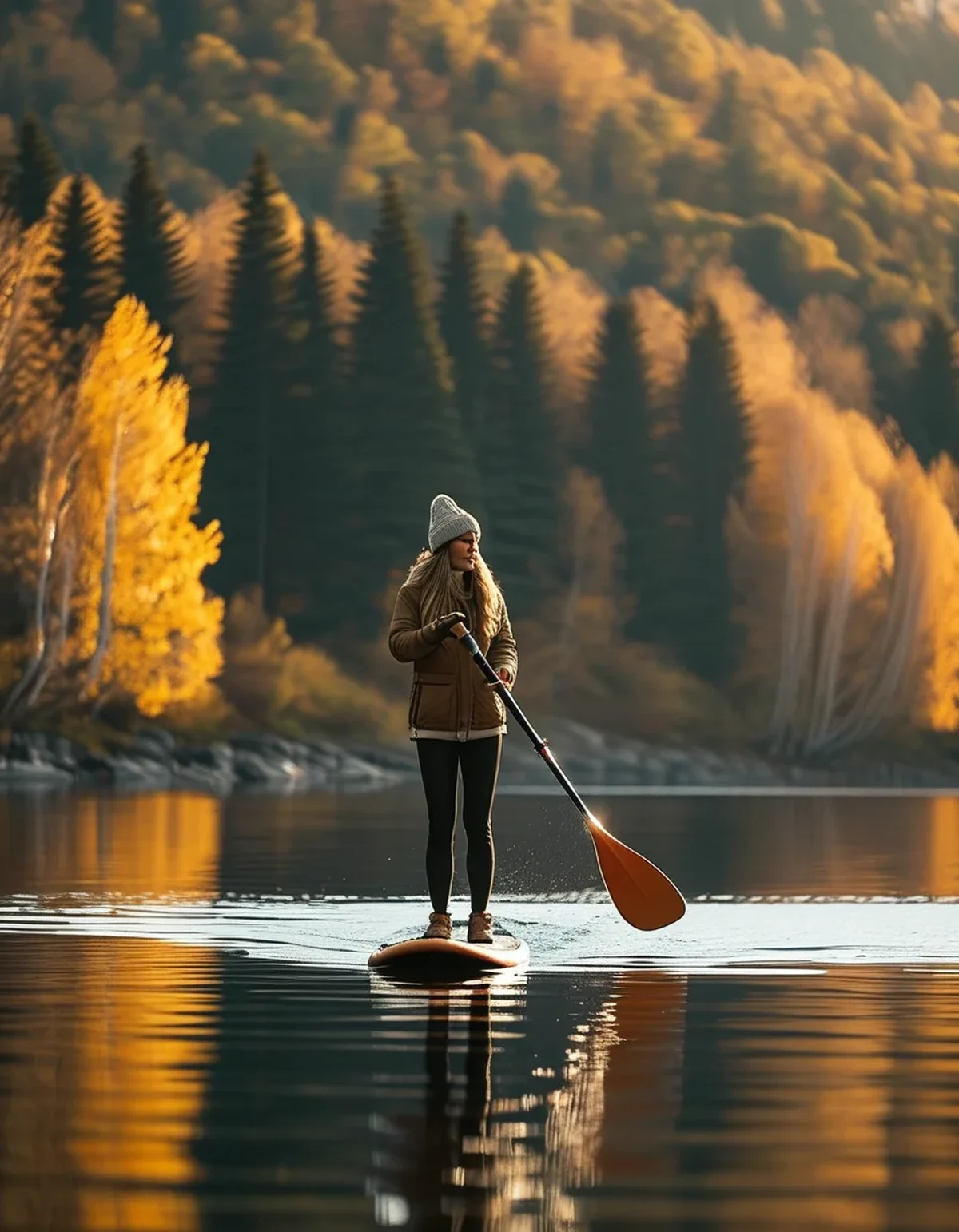
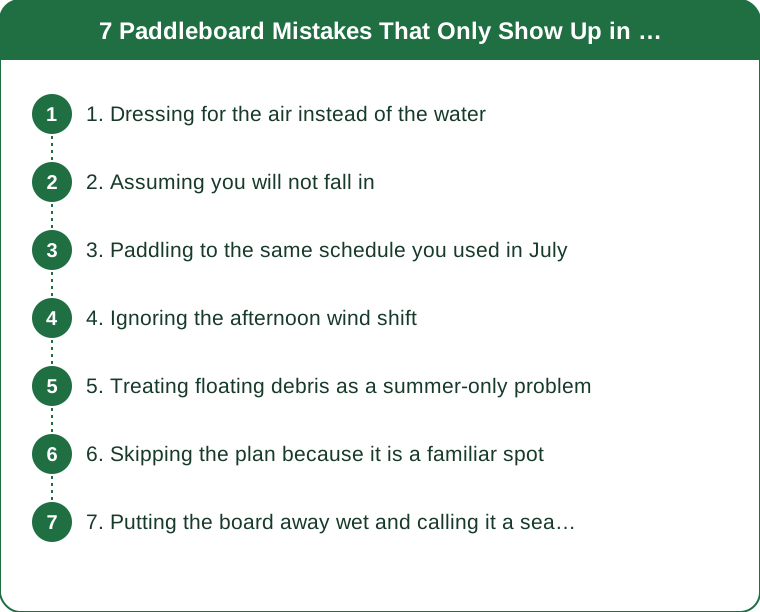
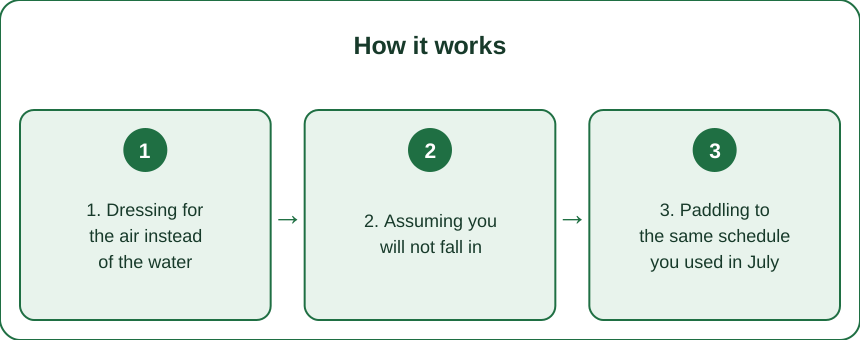
1. Dressing for the air instead of the water
The single most consequential autumn mistake.
In September and October, air temperature and water temperature come apart. A pleasant afternoon in the low twenties can sit on water in the low teens, because large bodies of water lose heat slowly and lag the air by weeks. You dress for what you feel standing on the shore, then fall into something considerably colder.
The rule paddlers use is straightforward: dress for immersion, not for the forecast. If the water is cold enough that an unplanned swim would be a problem, wear something that addresses it — a wetsuit, a drysuit, or at minimum thermal layers that retain some function when wet.
Cotton is the specific thing to avoid. Wet cotton holds water against the skin and loses essentially all insulating value, which is why it has a bad reputation in every cold-water sport.
A practical test: if you would hesitate to swim in it deliberately, you are underdressed for falling in accidentally.
2. Assuming you will not fall in
Summer builds a false confidence, because summer falls are refreshing rather than serious.
Cold water changes the consequences of the same event. Sudden immersion in cold water triggers an involuntary gasp and rapid breathing — the cold shock response — which peaks in the first minute or two and is the reason cold water is dangerous long before hypothermia becomes relevant. Strong swimmers are not exempt; the response is reflexive.
What helps:
- Wear the leash. In cold water your board is your flotation and your visibility. Separated from the board, everything gets harder immediately. Use a leash appropriate to the water type — quick-release for any moving water.
- Wear the flotation device. Rules vary by location, and the reasoning does not: a personal flotation device keeps you at the surface during the exact window when your breathing is out of your control.
- Practise a remount while it is still mild. The time to discover that climbing back on is harder than it looks is not in cold water at dusk.
If you do go in: the standard advice is to hold onto the board, control your breathing for the first minute, and only then act. The panic phase passes.
3. Paddling to the same schedule you used in July
Light disappears faster than anyone plans for.
After the equinox, daylight is dropping by a couple of minutes a day, and the loss compounds quickly across a month. A 5pm launch that was comfortable in mid-August leaves you finishing in poor light by late September.
Twilight on water is also shorter than it feels on land. Once the sun is behind the treeline or the hills, the surface goes dark and featureless well before the sky does, which makes reading chop, obstacles, and your own landing point noticeably harder.
Work backwards from sunset rather than forwards from your start. Decide the time you need to be off the water, subtract a buffer, and let that set the launch time. Carrying a light is sensible from September onward even when you do not intend to be out late — plans change more often than schedules do.
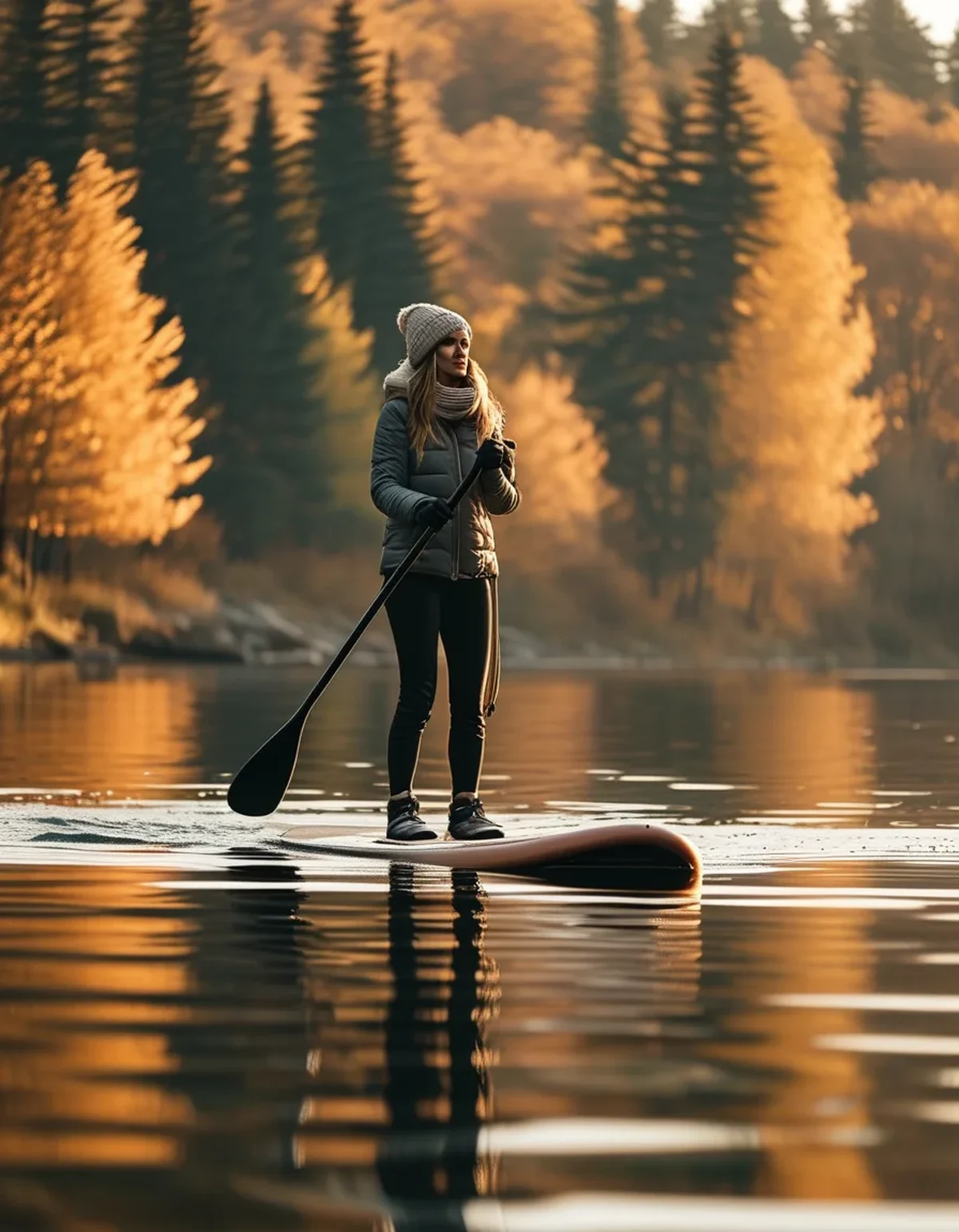
4. Ignoring the afternoon wind shift
Autumn wind behaves differently, and the difference is not subtle.
Through late summer and into autumn, land cools faster than water. That temperature difference drives afternoon and evening breezes, and on many lakes and coastal spots the wind builds later in the day rather than dying off as it tends to in high summer.
The classic trap: an easy downwind outbound leg in flat morning conditions, followed by a much harder return into a wind that arrived while you were out. A paddleboard is a large sail with a person attached, and progress into a headwind can slow dramatically.
Head out into the wind and come back with it. It is less pleasant at the start and considerably safer at the end. Check the forecast for the wind trend across the afternoon, not just the current speed — the direction of change matters more than the number.
Offshore wind deserves particular caution. It is deceptively calm at the shore and strengthens as you go out, which is precisely the wrong gradient.
5. Treating floating debris as a summer-only problem
Autumn puts things in the water that were not there in August.
After the first storms, waterways carry more branches, leaf mats, and displaced debris. Leaf accumulation in particular obscures what is beneath it and can hide submerged obstacles near banks and inlets.
Water levels also become less predictable. Rain raises rivers and changes flow rates quickly, and a river you know well at summer levels can be a genuinely different proposition after a wet week — faster, pushier, and with different hazards exposed or covered.
Check conditions on the day rather than relying on your memory of the spot. For any moving water, that includes flow levels. For lakes and estuaries, it mostly means having a look before committing.
Fin damage is the minor version of this problem and the most common one. A shallower, debris-heavier autumn waterway takes fins off boards regularly.
6. Skipping the plan because it is a familiar spot
Familiarity is where autumn risk concentrates, because the spot is the same and the conditions are not.
The basics take two minutes:
- Tell someone where you are going and when you expect to be back. The single highest-value habit in any solo outdoor activity.
- Carry a phone in a waterproof case, attached to you rather than to the board. A phone that leaves with the board is not a phone you have.
- Know your exit points. Where can you actually get off the water between launch and destination? On an unfamiliar shoreline in fading light, this is not obvious.
- Check that someone else is around. Autumn empties the water. The informal safety net of other paddlers thins out considerably after the summer, and a spot that felt busy in July can be deserted in October.
None of this is about expecting trouble. It is about the difference between an inconvenience and an incident being mostly logistical.
7. Putting the board away wet and calling it a season
The end-of-season mistakes are less dramatic and more expensive.
Inflatable boards should be dried thoroughly before long storage. Trapped moisture encourages mildew, and mildew on the deck pad is difficult to remove once established.
Store inflatables lightly rolled or loosely inflated rather than tightly compressed for months. Long periods under tight compression are harder on seams and material. Somewhere temperature-stable is better than a shed that swings from freezing to hot.
Rinse everything that met salt or brackish water, including the leash, the pump, and the fin hardware. Salt left on metal fittings over a winter is how a fin bolt seizes by spring.
Check and note what needs replacing now, while you remember. A worn leash, a slow valve, a cracked fin. Next April is when everyone discovers these and nobody has time to fix them.
And the optimistic version: the season does not have to end. With appropriate immersion protection, autumn and winter paddling is quieter, emptier, and for many people the best light of the year.
TL;DR:
- Dress for the water temperature, not the air — the two come apart in autumn and cold shock is the real hazard.
- Wear the leash and flotation; practise a remount while conditions are still forgiving.
- Plan backwards from sunset and carry a light, because twilight on water is short.
- Autumn wind tends to build in the afternoon — go out into it, come back with it.
- Expect more debris and less predictable water levels, and check the spot on the day.
- Tell someone your plan and carry your phone on you, not on the board.
- Dry, rinse, and loosely store gear before winter, and note repairs while you remember them.
Autumn is genuinely one of the best paddling seasons — flat mornings, no crowds, extraordinary light. It just asks for a different set of habits than the ones August let you get away with.
This is general information, not medical advice. Conditions vary enormously by location; follow local safety guidance and regulations.
Keep Reading
This article is for general informational and styling purposes only. Fit, sizing, and product availability may vary.