7 Paddleboard Mistakes That Show Up Only in Choppy Water
Quick Answer: Choppy water exposes seven specific errors that flat water conceals: a stance that is too narrow, locked knees, gripping the board with your toes, a paddle entry that is too far forward, looking down at the board, holding your breath, and paddling with your arms instead of your torso. Each is invisible on glass and each becomes a balance problem the moment the surface moves. Fix them in order and rough water stops feeling like a different sport.
Most paddlers who feel confident on calm mornings and unstable on windy afternoons have not lost skill. They have simply been practicing in conditions that never tested it.
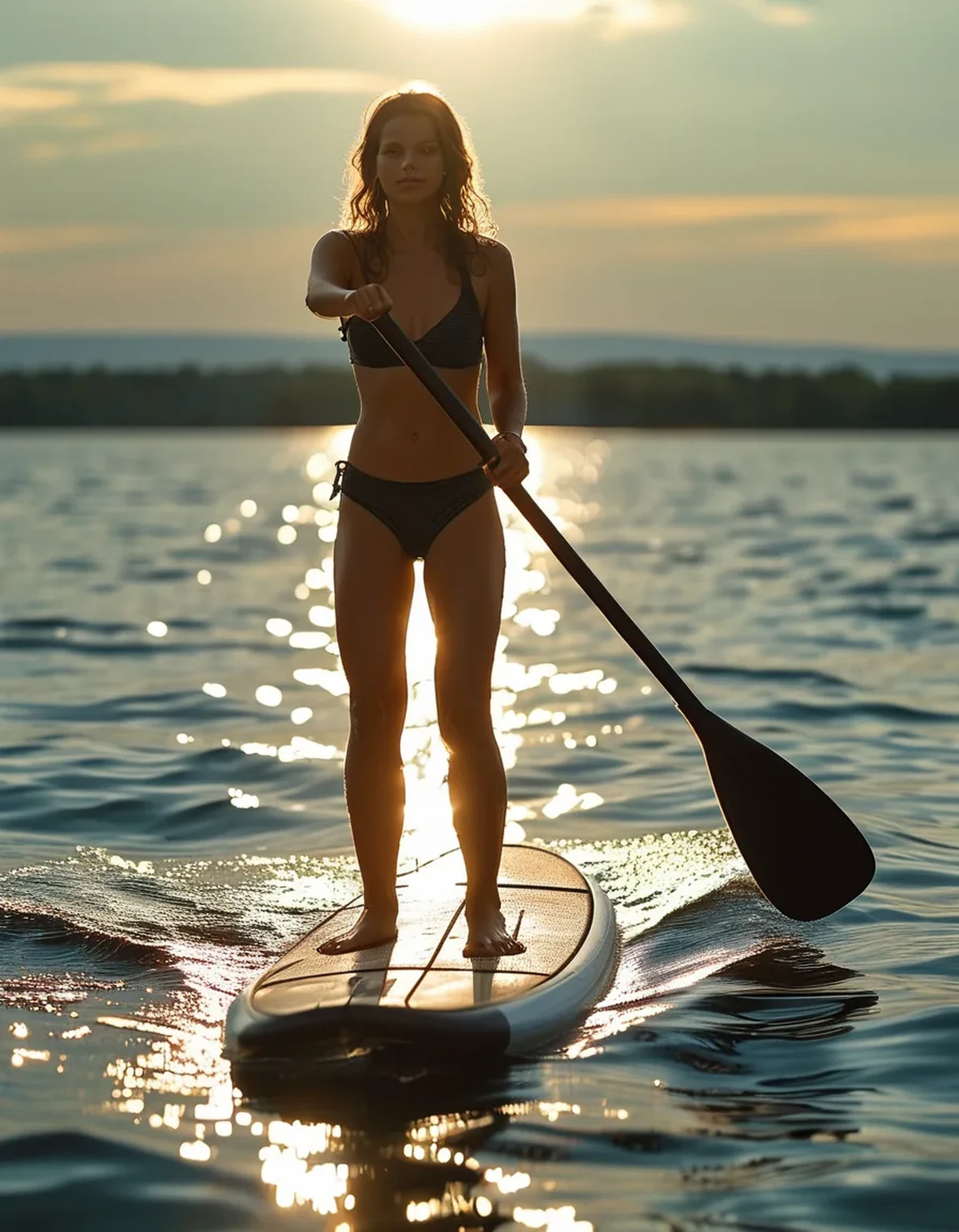
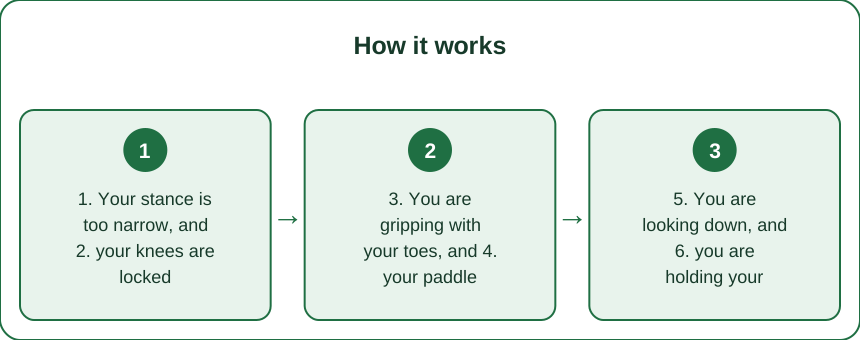
1. Your stance is too narrow, and 2. your knees are locked
1. Stance too narrow
On flat water a narrow stance is fine and even feels efficient. In chop, your base of support has to be wide enough to absorb a board that is tilting on two axes at once.
The fix is boring and immediate: feet hip-width to slightly wider, centered on the handle, toes pointing forward. Many paddlers stand with feet closer than hip-width without ever realizing it, because it was never punished before.
A useful check — if you can be nudged off balance by a wake from a passing boat, your stance is too narrow for the day’s conditions.
2. Locked knees
This is the single biggest one. Straight legs transmit every board movement directly into your torso, so the board’s instability becomes your instability.
Soft, unlocked knees turn your legs into suspension. The board can move underneath you while your upper body stays relatively still. Aim for roughly the knee bend you would use standing on a moving bus.
Locked knees are also the reason people describe their legs shaking on rough days. That tremor is a fatigued quad fighting a battle that bent knees would have avoided entirely.
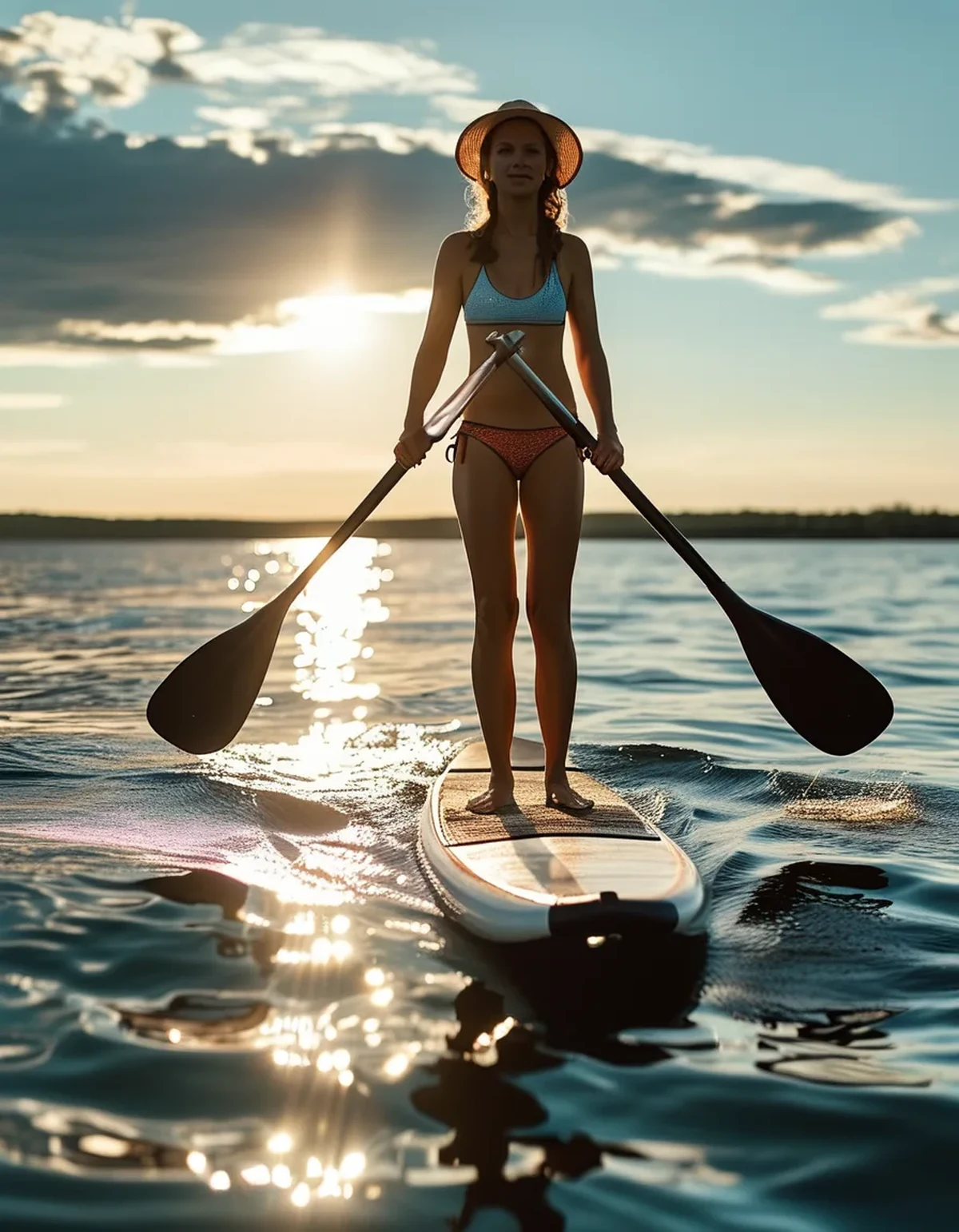
3. You are gripping with your toes, and 4. your paddle enters too far forward
3. Toe gripping
Curling your toes into the deck pad feels like it should help. It does the opposite. Toe gripping locks your ankles, and locked ankles remove the first and fastest joint you have for making balance corrections.
Keep your toes flat and let your ankles move. If your arches cramp after a windy session, toe gripping is almost certainly why.
4. Paddle entry too far forward
On flat water, reaching far forward gives a longer, more powerful stroke. In chop, an over-reach shifts your weight forward at exactly the moment the nose is dropping into a trough, which is how paddlers end up going over the front.
Shorten the reach by roughly 15 to 20 centimeters in rough conditions. You lose a small amount of power per stroke and gain a large amount of stability, which is a trade that pays for itself in the first hundred meters.
A shorter stroke also raises your cadence, and higher cadence means more frequent contact with the water. The paddle in the water is a third point of support — the more often it is there, the more stable you are.
5. You are looking down, and 6. you are holding your breath
5. Looking down at the board
When the water gets rough, almost everyone looks down. It is instinctive and it is exactly wrong.
Your balance system relies heavily on the horizon as a stable reference. Looking at a moving board gives your brain a moving reference, which makes it harder to tell what is level. Combined with the inner ear signals from the chop itself, the result is unsteadiness and sometimes mild nausea.
Fix: pick a fixed point on shore and keep your eyes on it. Glance at the board only when you need to reposition your feet. This one change produces a bigger stability improvement than most technique corrections.
6. Breath holding
Almost universal and almost never noticed. Under stress, people hold their breath, and breath-holding stiffens the entire trunk — which removes exactly the mobility you need to stay balanced.
Count your breathing to a rhythm: exhale on the catch, inhale on the recovery. Making breathing rhythmic also lowers the stress response that caused the holding in the first place.
7. You are paddling with your arms, plus the one thing to fix first
7. Arm paddling
In chop, arm-only paddling fails faster than on flat water for two reasons. First, arms fatigue quickly and a tired paddler is an unstable paddler. Second, arm paddling keeps your torso rigid and upright, which raises your center of mass at the worst possible time.
Rotate from the torso, keep the lower arm relatively straight, and drive with the top hand. Torso rotation also naturally lowers your center of mass slightly, which is a stability bonus you get for free.
A reliable sign you are arm-paddling: your shoulders burn before your back and obliques do.
Which one should you fix first?
Knees. If you fix nothing else, unlock your knees. It addresses the largest share of the instability, requires no skill to implement, and takes effect on the very next stroke.
Then eyes on the horizon, then stance width. Those three cover most of what separates a comfortable rough-water paddler from an uncomfortable one, and none of them requires more strength or more time on the water.
When should you just not go out?
When the wind is offshore, when white caps are forming, or when you would not be comfortable swimming back the distance you are paddling out. Technique fixes handle chop. They do not handle being blown away from shore, and offshore wind is the condition behind most SUP rescues.
FAQ: Rough Water Paddling, Answered
Should I kneel instead when it gets rough?
Yes, without hesitation. Kneeling drops your center of mass dramatically and is a legitimate technique, not a retreat. Experienced paddlers drop to their knees in gusts as a matter of routine.
Does a wider board fix all of this?
It helps and it hides. A wider board buys stability, which means the technique errors above stay invisible for longer. That is fine for enjoyment and unhelpful for progression.
How do late summer conditions differ from spring?
Afternoon thermal winds are stronger and build faster in late summer, so a calm morning can turn choppy by 2pm with no change in the forecast. Plan for the water you might be paddling back in, not the water you launched in.
Always wear a leash and an appropriate flotation device. This is general information, not a substitute for local safety guidance.
TL;DR:
- Unlock your knees first — it fixes the largest share of rough-water instability instantly.
- Widen your stance, keep your toes flat, and shorten your paddle reach by 15 to 20cm.
- Eyes on the horizon, not the board; breathe in rhythm with the stroke.
- Rotate from the torso, and drop to your knees in gusts without treating it as a failure.
Pick the next moderately breezy afternoon and work through these in order. Flat water will teach you almost none of them.
Keep Reading
This article is for general informational and styling purposes only. Fit, sizing, and product availability may vary.