Falling Off Your SUP Gracefully Is a Skill — and It's the First One to Learn
Quick Answer: Falling is part of paddleboarding — the skill is controlling it: fall away from the board (flat, feet-first-ish, never headfirst), keep hold of your paddle if easy (board first if you must choose — you’re leashed to it anyway), and remount from the side at the board’s center: hands on the far rail, kick your legs to the surface, pull-slide your chest across, then rotate to kneeling. Practice it deliberately on day one and every fall after becomes a splash, not an event.
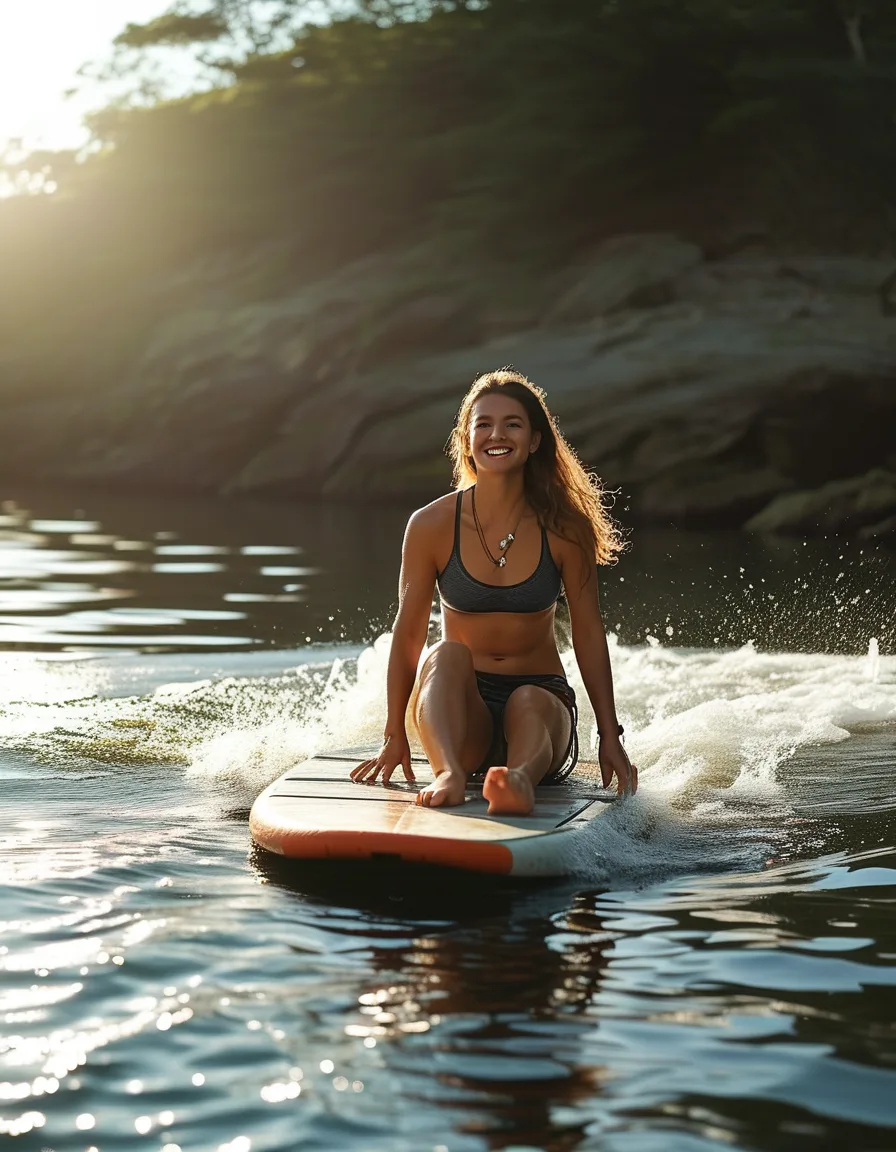
Watch beginners on any lake: the ones white-knuckling a rigid stance, terrified of the water they’re floating on — and the relaxed ones who’ve already fallen five times and stopped counting. The difference isn’t balance. It’s that the second group practiced falling on purpose.
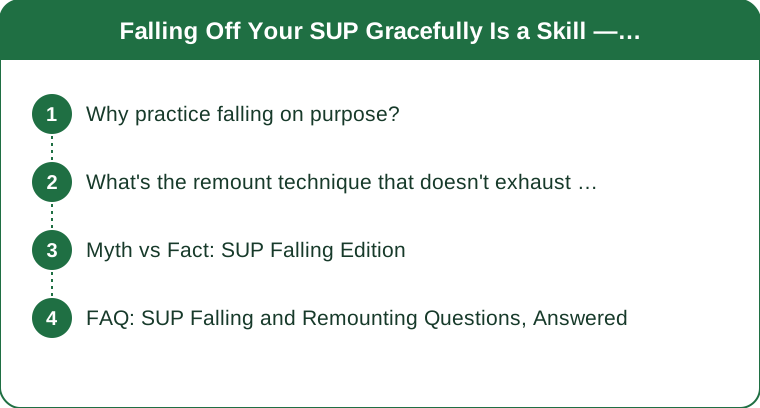
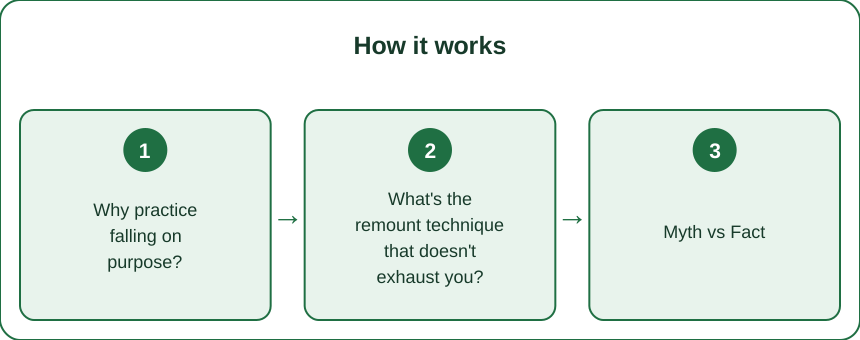
Why practice falling on purpose?
Three compounding reasons:
- Safety: an unplanned panic-fall goes wherever momentum sends it — including onto the board, which is the main way paddleboarding actually hurts people (rails and fins are hard; water is not). A practiced fall goes flat and away, every time, automatically.
- Balance unlock: fear of falling is what makes beginners stiff, and stiffness is what makes them fall. Once your body knows the fall is a non-event, you relax — and relaxed hips are 80% of SUP balance. The fastest way to fall less is, genuinely, to fall a few times on purpose.
- Remount readiness: deep-water remounting is easy technique but surprisingly taxing as a discovery — arms-only haulers gas out fast, and tired flailing beside a board in open water is exactly the scenario to have pre-solved on a calm day, ten feet from shore.
The day-one drill: paddle out to chest-deep calm water, and fall off five times on purpose — each side, plus once ‘surprised’ mid-stroke. Remount each time. Fifteen minutes, and the sport changes character.
What’s the remount technique that doesn’t exhaust you?
The secret is that good remounting is legs and buoyancy, not arms:
- Position at the board’s center (by the carry handle), on the side. Never remount from the tail or nose — the board see-saws.
- Hands: near rail and far rail — reach your outside hand across to grip the far edge.
- The step everyone skips: kick your legs up to the surface behind you so your body is horizontal in the water, like a swimmer. Vertical-hanging bodies are anchors; horizontal ones slide.
- Kick hard + pull: a strong flutter kick while pulling with the far-rail hand slides your chest onto the deck — it’s a slide, not a pull-up.
- Rotate to kneeling once your hips reach the board, then stand when settled.
If it fails: you’re almost certainly hanging vertical (re-kick to horizontal) or amidships-adrift (re-center at the handle). Practicing while fresh is the whole point — the technique that works tired is the one grooved when you weren’t.

Myth vs Fact: SUP Falling Edition
Myth: Good paddleboarders don’t fall. Fact: Good paddleboarders fall better — and in anything interesting (wind chop, wakes, downwind runs, SUP surf) they fall plenty. Falling frequency tracks conditions and ambition, not skill level; falling quality tracks skill.
Myth: Hold onto the board as you fall to stay safe. Fact: Reverse it — the board is the only hard object in the environment, so the fall goes away from it. Your leash keeps the board within reach; that’s its entire job. (Corollary: always wear the leash — a fallen paddler and a wind-blown board separate faster than anyone expects.)
Myth: Falling flat hurts — dive in cleanly instead. Fact: Flat-ish and shallow is exactly right: SUP water depth is unknown-by-default, and headfirst entries are the one genuinely dangerous option. Flat spreads impact and stays shallow — undignified, splashy, and correct.
Safety footnote that outranks all technique: leash + PFD per local rules, and cold-water falls are their own serious topic — dress for the water temperature, not the air. This is general information, not medical advice.
FAQ: SUP Falling and Remounting Questions, Answered
What about the paddle — grab it or the board?
If the paddle’s in reach, keep it (one less swim); if you must choose, board first — you’re leashed to it, and a board-mounted paddler can hand-paddle to a drifting paddle far easier than swim-tow a board. Bright-colored blades exist for exactly this retrieval moment.
I can’t get my chest over the rail — too little upper body strength?
Almost never strength — it’s the vertical-body anchor problem. Exaggerate step 3: kick to full horizontal before pulling, and use a moment of dolphin-kick bounce for momentum. Smaller paddlers remount big boards all day on technique.
Does falling practice apply to inflatables?
Even more pleasantly — iSUP rails are softer and the deck is grippier, making both the (rare) board-contact fall and the chest-slide friendlier. The technique is identical; the consequences are just fluffier.
TL;DR:
- Fall away from the board, flat and shallow — the board is the only hard thing out there, and the leash keeps it close
- Remount at the center: far-rail grip, legs kicked horizontal, kick-and-slide (never a pull-up), rotate to kneeling
- Practice five deliberate falls on day one — fear of falling is what was wrecking your balance
- Leash always, PFD per rules, dress for water temperature
The swimmers relaxed on their boards aren’t braver than you — they’ve just already met the water on purpose. This is general information, not medical advice.
Keep Reading
This article is for general informational and styling purposes only. Fit, sizing, and product availability may vary.