SUP as a Workout: The Paddleboard Training Sessions Beyond the Casual Float
Quick Answer: A paddleboard becomes real training the moment you add structure. Four session types cover it: interval paddles (2 min hard / 1 min easy × 8–10), distance days (45–60 min steady zone 2), on-board strength circuits, and technique drills. Two to three sessions a week in season builds core, balance, and aerobic base — and an hour of moderate paddling burns roughly 400–600 calories.
The same board does two completely different jobs.
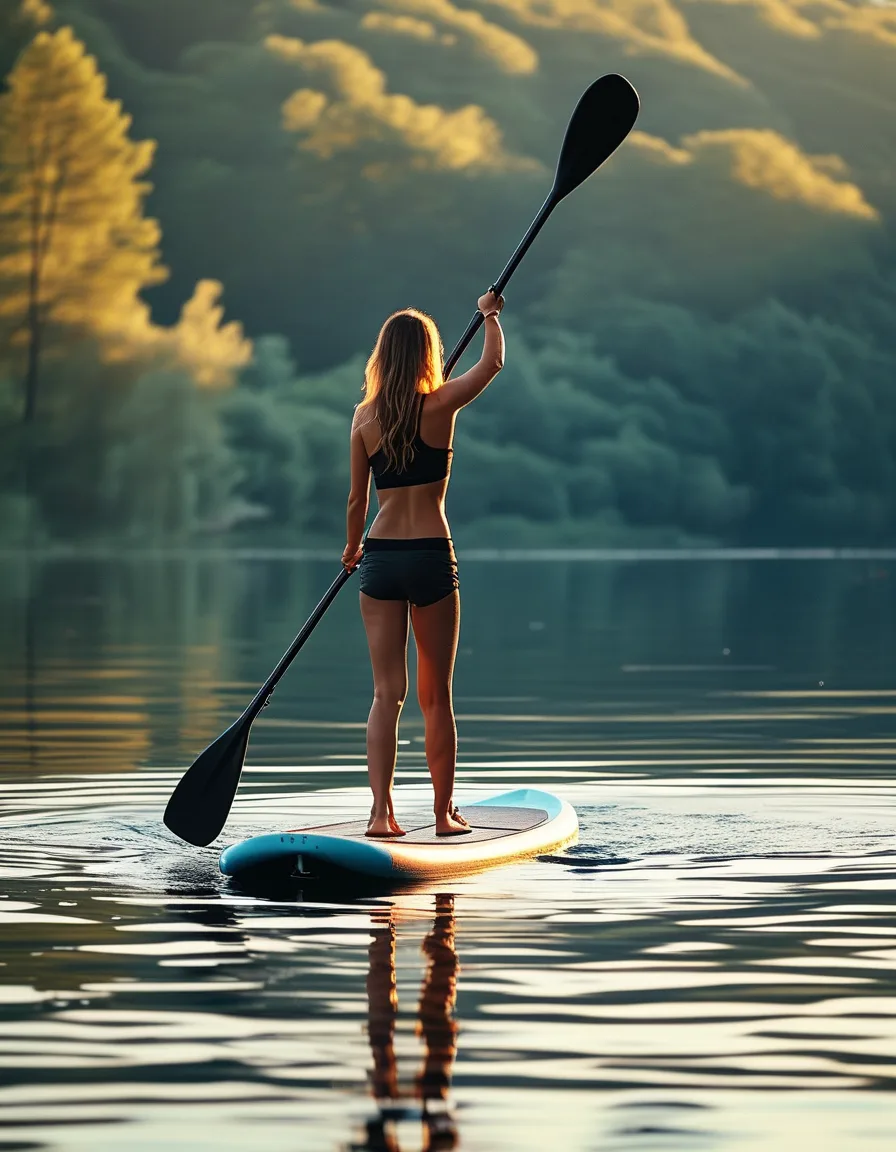
On Sunday it’s a floating picnic platform and that’s a perfectly good use of a board. On Tuesday, with a watch and a plan, it’s a core and cardio session that leaves you genuinely worked. The hardware doesn’t change. The intent does.
What Does Paddleboarding Actually Train?
Core, continuously. Standing on an unstable surface means your deep abdominals, obliques, and spinal stabilizers never switch off. An hour of paddling is an hour of low-level core work — the plank you don’t notice because you’re looking at the view. It’s specifically anti-rotation work, which is the quality gyms train deliberately with cable chops and Pallof presses.
Back and shoulders, not arms. A correct stroke drives from torso rotation with the lats and mid-back doing the pulling. If your arms are the thing that gets tired, that’s a technique signal, not a fitness one.
Balance and proprioception. This is SUP’s most distinctive contribution. An unstable surface trains ankle, hip, and core reflexes in a way almost nothing on land replicates. It’s the closest thing to a balance gym that also happens to be outdoors.
Aerobic base. Steady paddling sits comfortably in zone 2 — the moderate, conversational intensity that builds endurance. Structured intervals push it much higher. Casual paddlers are frequently surprised by their heart rate data.
All of it low-impact. Zero joint pounding. Which makes SUP an unusually good option for anyone whose knees have opinions about running.
Four Structured SUP Sessions
Session 1: The Interval Paddle (25–35 min)
Warm up 5 minutes easy. Then 2 minutes hard / 1 minute easy × 8–10 rounds. Cool down 5 minutes.
“Hard” means you can speak in short phrases but not hold a conversation. Focus on increasing stroke power rather than stroke rate — flailing faster just splashes.
Variation: a pyramid — 1, 2, 3, 4, 3, 2, 1 minutes hard with equal easy between.
Session 2: The Distance Day (45–60 min)
Steady paddling at a conversational effort. Zone 2, the endurance builder. Give it a destination — a point across the bay, a bridge, a cove — so it logs itself as exploration rather than a chore.
This is the session that makes everything else easier, and the one most people skip because it isn’t dramatic.
Session 3: The On-Board Strength Circuit (30 min)
Anchor somewhere calm and shallow. 4 rounds:
- Paddle hard for 2 minutes
- 15 squats on the board
- 10 kneel-to-stand transitions
- 30-second plank on the deck
- 10 paddle-braced lunges per side
Expect to fall in. That’s part of the workout and, honestly, part of the fun.
Session 4: The Technique Day (30 min)
Isolate the stroke phases — reach, catch, power, recovery — one at a time. Practice buoy turns and pivot turns. Film yourself from the side with a phone on shore.
Boring, and it’s the session that makes the other three more productive. Twenty minutes of stroke work adds more speed than an hour of paddling badly.
Weekly shape in season: 2–3 SUP sessions plus 1–2 land strength sessions. Off-season, a rowing machine and core work maintain most of the same qualities.
How Do You Make Paddling Harder?
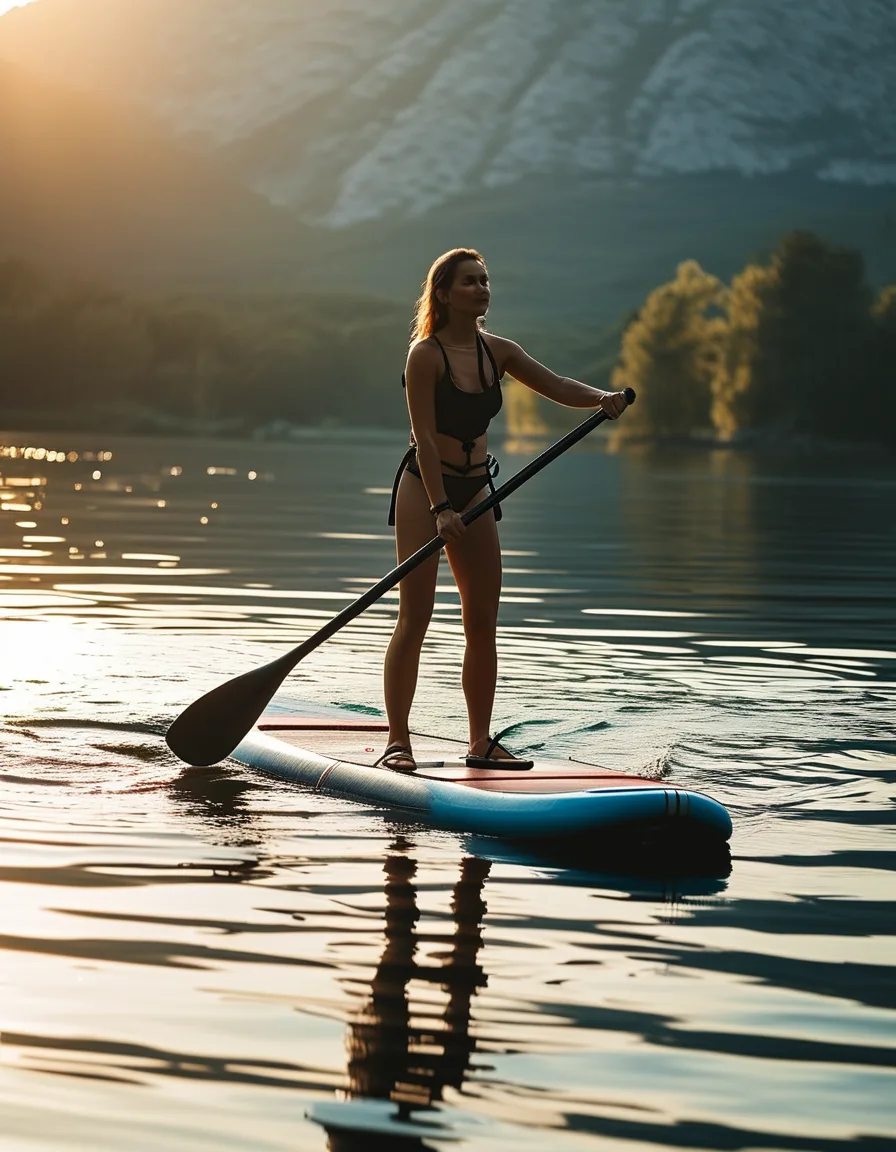
Five progression levers, roughly in the order you should reach for them:
1. Conditions. Flat calm → light chop → a manageable breeze. Water conditions are progressive overload you don’t have to buy. The wind rule stays absolute: out against it, home with it. Paddling downwind first is how a training session becomes a rescue.
2. Stance. Feet closer together, then a staggered surf stance. Narrowing your base dials up the stability demand enormously without changing anything else.
3. Cadence. Stroke-rate intervals — 30 seconds of quick, powerful cadence, then settle. Spikes heart rate reliably.
4. Load. A passenger — a kid or a calm dog — is genuinely effective instability training and considerably more entertaining than a weight vest.
5. Time trials. Same route, monthly, on a GPS watch. Nothing motivates like a number that’s moving.
What Nobody Tells You About SUP Training
- Your core soreness arrives on day two, not day one. Classic delayed onset, and it surprises people who felt fine walking off the water.
- Board width is a training variable. A narrower board is harder in exactly the way that makes you better. Moving from 34” to 30” is a real progression step once you’re competent.
- Heart rate lies a little on the water. Cooling from water and wind means you’ll often be working harder than perceived exertion suggests. Trust the watch on distance days.
- The balance transfer to land is real and noticeable. Single-leg strength and trip-recovery both improve over a season of paddling. It’s fall-prevention training disguised as summer fun.
- Blue space counts twice. Time on water has documented effects on mood and stress beyond the exercise itself. The session that improves your fitness and your week is a good deal.
- Float days stay completely legitimate. The picnic platform and the training tool are the same board. Choose the intent per session and don’t let the training version colonize all of them.
Safety constants, regardless of session type: leash always — it’s your flotation device and a board blown away from you is the actual danger. PFD per local regulations. Check wind and conditions before you launch. A workout never outranks water safety.
When to see a professional: shoulder pain during or after paddling usually indicates an arm-dominant stroke rather than a torso-driven one — fix the technique first. If it persists more than a week or two, get it assessed rather than paddling through it.
Mini FAQ
How many calories does paddleboarding burn?
Roughly 300–450 per hour for casual flat-water paddling and 500–700+ for interval or race-pace sessions, depending on body weight and conditions. Choppy water and headwind increase it substantially — sometimes by 30% or more.
Is paddleboarding good for building core strength?
Yes, particularly for the deep stabilizers and anti-rotation strength. The continuous low-level engagement over 45–60 minutes accumulates significant time under tension, and the unstable surface trains reflexive core activation that deliberate gym exercises approximate but don’t fully replicate.
How often should you paddleboard for fitness?
Two to three sessions a week in season, varying the type — one interval session, one distance day, and optionally a strength or technique session. Add 1–2 land-based strength sessions for balanced development, since SUP is comparatively light on lower-body loading.
TL;DR
- Structure is what turns a float into training. Same board, different intent.
- Four sessions: intervals (2/1 × 8–10), distance (45–60 min zone 2), on-board strength circuit, technique day.
- It trains core continuously, back and shoulders via torso rotation, balance like nothing on land, and zone 2 cardio.
- Progress via conditions, stance width, and cadence before anything else.
- Wind rule: out against it, home with it. Non-negotiable.
- Leash always. It’s your flotation device.
Intervals Tuesday, distance Saturday, float Sunday. Both personalities employed.
Keep Reading
This article is for general informational and styling purposes only. Fit, sizing, and product availability may vary.