SUP Paddling Technique: How to Paddle Efficiently (and Save Your Shoulders)
Quick Answer: Good SUP technique comes down to four things: the blade angles away from you (yes, really), your arms stay mostly straight, you rotate your torso to pull rather than bending your arms, and you exit the stroke at your feet instead of dragging it past your hips. Switch sides every 4–6 strokes to track straight. Get those right and your shoulders stop hurting and your board stops wandering.
Watch any beginner on a paddleboard for thirty seconds and you’ll see the same picture: elbows bending hard, board veering left, and a facial expression that says this is more work than the photos suggested.
Then a decent paddler goes past looking like they’re barely trying, moving twice as fast. The difference is almost entirely four small technical things — and one of them is that half of beginners are holding the paddle backwards.
Why technique matters more on a paddleboard than you’d think
Your shoulders are small; your torso isn’t. Arms-only paddling puts every stroke through the shoulder joint and a handful of small muscles. Torso rotation recruits your lats, obliques, and back — vastly more muscle, far less joint stress. This is the whole reason experienced paddlers can go for two hours and beginners are done in twenty minutes.
Bad technique makes the board wander. A stroke that continues past your hips actively turns the board away from your paddle side. Then you correct, then you correct back, and you’ve paddled twice as far as the distance you covered.
Efficiency is the difference between a chore and a sport. Once the stroke works, distance stops being the limiting factor and you can actually go somewhere.
The stroke, step by step
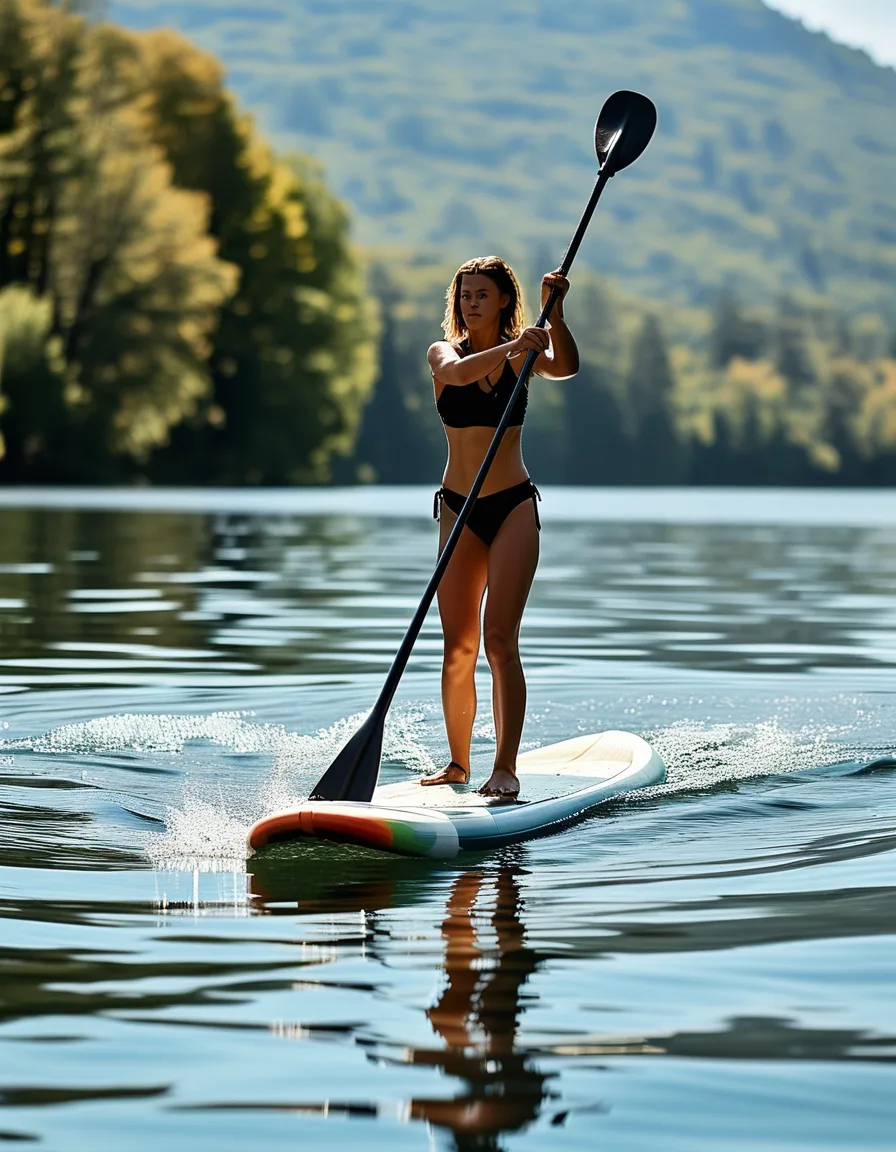
1. Set your stance. Feet hip-width apart, roughly centered on the board (around the carry handle), toes pointing forward — not surf stance. Knees soft, not locked. Stand tall, eyes on the horizon, not down at your feet. Looking down is what makes people wobble.
2. Check your blade angle. The blade is bent, and the bend angles forward, away from you — the flat face of the blade pulls the water toward you. Roughly half of first-timers hold it backwards, because backwards looks more intuitive. If the logo is on the side facing you and the blade tips away at the bottom, you’re right.
3. Set your hands. Top hand on the T-grip, bottom hand about shoulder-width down the shaft. Quick check: hold the paddle overhead with the shaft on your head — your elbows should each make roughly a 90-degree angle.
4. Reach and plant. Rotate your torso and reach the blade forward, planting it fully in the water before you pull. A blade only half in the water gives you half the stroke. This is the “catch,” and it’s where most efficiency is won or lost.
5. Pull with your torso. Here’s the key: your arms stay relatively straight and your body does the work. Think of pulling the board past the paddle rather than pulling the paddle past the board. Your top hand drives forward and down, your torso unwinds, and the blade stays anchored.
6. Exit at your feet. Take the blade out of the water as it reaches your ankles. Everything past that point is dragging water, lifting the board’s nose, and turning you off course. Short stroke, early exit.
7. Recover and repeat. Feather the blade out and forward, keep it low, plant again.
8. Switch sides every 4–6 strokes. Switching is how you track straight — much easier than steering. Slide the hands: top hand to the shaft, bottom hand to the T-grip.
9. Keep the grip relaxed. A death grip on the shaft fatigues your forearms fast and does nothing for power. The top hand pushes; the bottom hand mostly just hooks.
5 mistakes everyone makes
1. The blade is backwards. Genuinely the most common error, and the easiest to fix. The bend angles away from you.
2. Paddling with the arms. If your elbows are bending significantly on the pull, you’re arm-paddling. Straighten the arms and rotate your torso instead. Your stroke rate will drop and your speed will go up.
3. The stroke goes too far back. Dragging the blade past your hips is wasted effort and it turns the board. Exit at the feet.
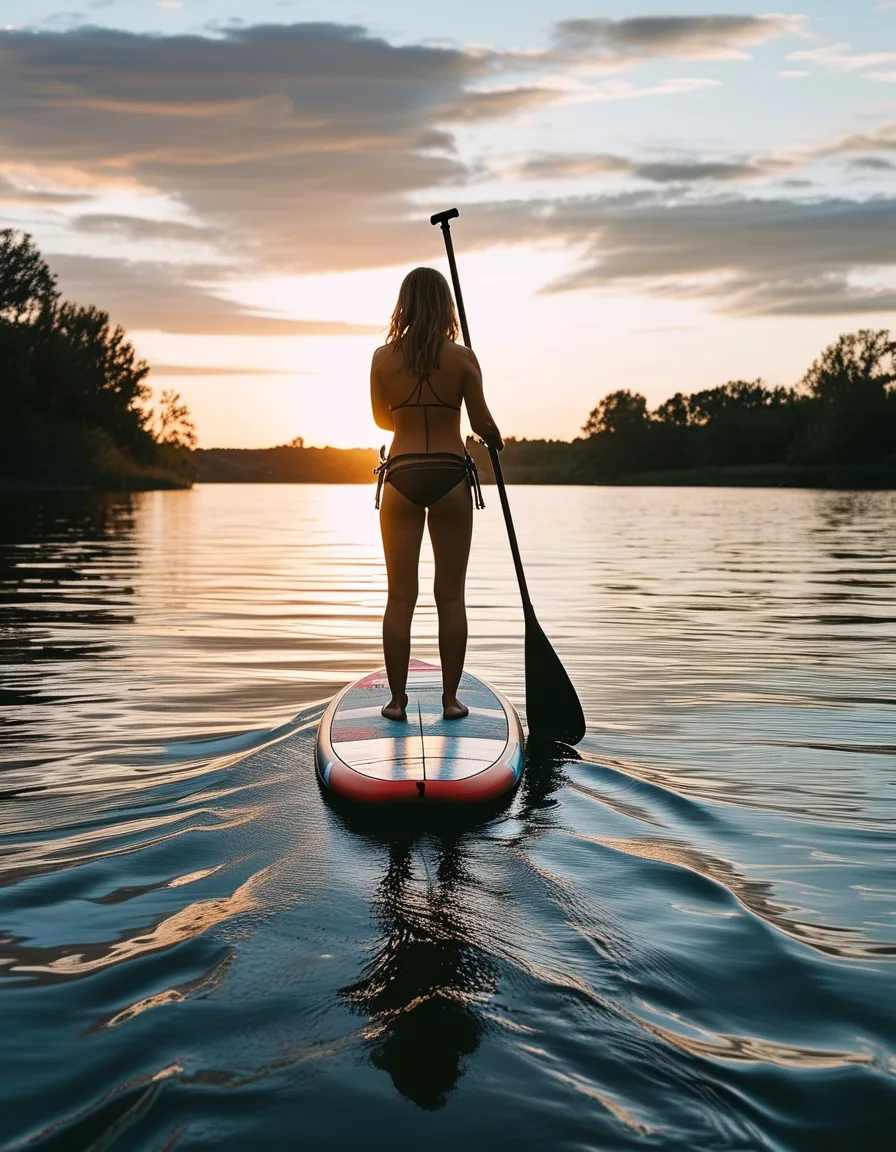
4. Hunching and staring at the board. Looking down shifts your weight forward and destabilizes you. Head up, chest open, eyes on where you’re going — balance is better looking at the horizon than at your toes.
5. Standing too far back. Too far back sinks the tail and turns the board into a plough. Too far forward digs the nose. Centered over the handle is the default.
The third one is the sneaky one — it feels like you’re getting more out of each stroke, and you’re getting less.
Progressing from here
Learn on flat, calm water. A protected lake, a bay, or a slow river with no boat traffic. Wind is the beginner’s real enemy far more than waves.
Practice the pieces separately. Kneel on the board and drill the torso rotation with no balance demand. Then stand and rebuild the stroke.
Add distance before speed. 30 minutes of continuous paddling with clean technique beats sprints with a collapsing stroke.
Then branch out. Once the stroke is automatic, SUP fitness sessions and SUP yoga become genuinely accessible — and both make you a better paddler by improving your balance base.
Learn the turns. A sweep stroke (wide arc from nose to tail) turns you away from the paddle side; a reverse sweep turns you toward it. Knowing both saves a lot of frustrated correcting.
Safety notes
Wear a leash — it keeps you connected to your board, which is your flotation device. In most jurisdictions a personal flotation device is legally required for stand-up paddleboarding outside surf zones, so check your local rules. Check the wind forecast before you go and paddle into the wind first so you’re not fighting it on the way home when you’re tired. Offshore wind on flat water is deceptive and is how people end up a long way from shore. Tell someone where you’re going, and don’t paddle alone until you’re confident.
FAQ
How do you paddle a SUP in a straight line?
Switch sides every 4–6 strokes, keep the stroke short with an exit at your feet, and plant the blade close to the rail of the board rather than out wide. Long strokes that continue past your hips are the main cause of a wandering board.
Which way should the paddle blade face on a SUP?
The blade angles forward, away from you — the bend points toward the nose of the board. It feels backwards to most beginners, which is exactly why so many people paddle with it reversed.
Why do my shoulders hurt after paddleboarding?
Almost always arms-only paddling. If your elbows are bending hard on each stroke, your shoulders are doing work your torso should be doing. Straighten the arms, rotate through the trunk, and shorten the stroke — most people feel the difference within a single session.
TL;DR:
- Blade angles forward, away from you. Half of beginners have it backwards.
- Arms stay mostly straight; the torso rotates and does the pulling.
- Reach forward, plant the blade fully, exit at your feet.
- Anything past your hips is drag and it turns the board off course.
- Switch sides every 4–6 strokes to track straight.
- Stand centered, knees soft, eyes on the horizon — not your feet.
- Wear a leash, check the wind, and paddle into it first.
Keep Reading
This article is for general informational and styling purposes only. Fit, sizing, and product availability may vary.