SUP Yoga: Downward Dog on Water (Falling Is Part of the Class)
Quick Answer: SUP yoga is yoga practiced on an anchored paddleboard. The water multiplies the balance demand of every pose, so classes start low and wide — seated flows, table top, sphinx, wide-kneed child’s pose — with standing poses arriving much later or never. You will fall in, it’s warm and funny, and the floating savasana at the end is what converts people. Wear quick-dry everything and secure your sunglasses.
Someone suggests yoga on a paddleboard and it sounds like a stunt. A photograph, basically. Something invented for an aspirational feed.
Then you take a class and spend forty minutes discovering that table top — table top, the pose you have never once thought about — is genuinely difficult.
The absurdity converts almost everyone, and it converts them through humility first and then through the best final pose in the discipline.
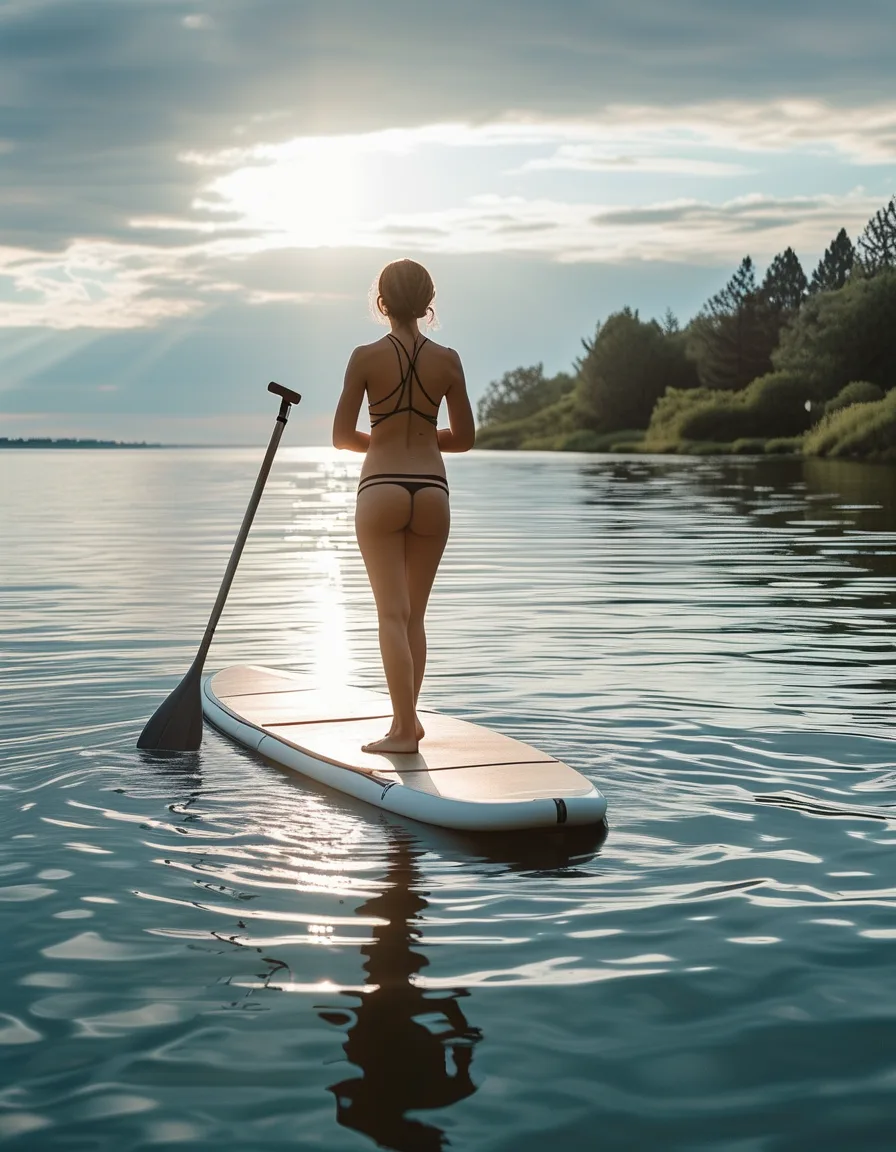
Why is yoga so much harder on a paddleboard?
Because the ground moves, and every pose has to be renegotiated with it.
On land, a stable floor means your stabilizing muscles work in brief corrections. On water, the board responds to every shift in weight, breath, and passing boat wake — so those stabilizers fire continuously rather than intermittently. That’s the actual workout, and it’s why a class of relatively easy poses leaves you noticeably tired.
The specifics are humbling in a very consistent order: table top wobbles, downward dog becomes a negotiation, and warrior two turns into a diplomatic mission with the water.
The transfer back to land is real. Practitioners who do a season of SUP yoga typically report measurably better balance in land poses afterward — you’ve been training the correction reflex the entire time.
What poses do you actually do in a SUP yoga class?
Low and wide, with maximum contact between you and the board.
The beginner sequence looks like: seated flows and twists, table top, sphinx or low cobra, wide-kneed child’s pose, and gentle bridge. Anything with three or four points of contact and a low center of gravity.
Standing poses arrive later, or never. A class that never gets you to your feet is a completely valid class, and instructors who push standing poses on beginners in the first session are doing it wrong. Warrior and tree are the eventual reward, not the entry requirement.
Boards are usually anchored. Most classes anchor each board so drift doesn’t become a navigation problem on top of everything else. If you’re practicing on your own, anchoring is the single most important setup decision — otherwise you’ll spend the class paddling back.
Positioning matters too: you want to be centered on the board’s widest point, roughly over the carry handle, where stability is highest.
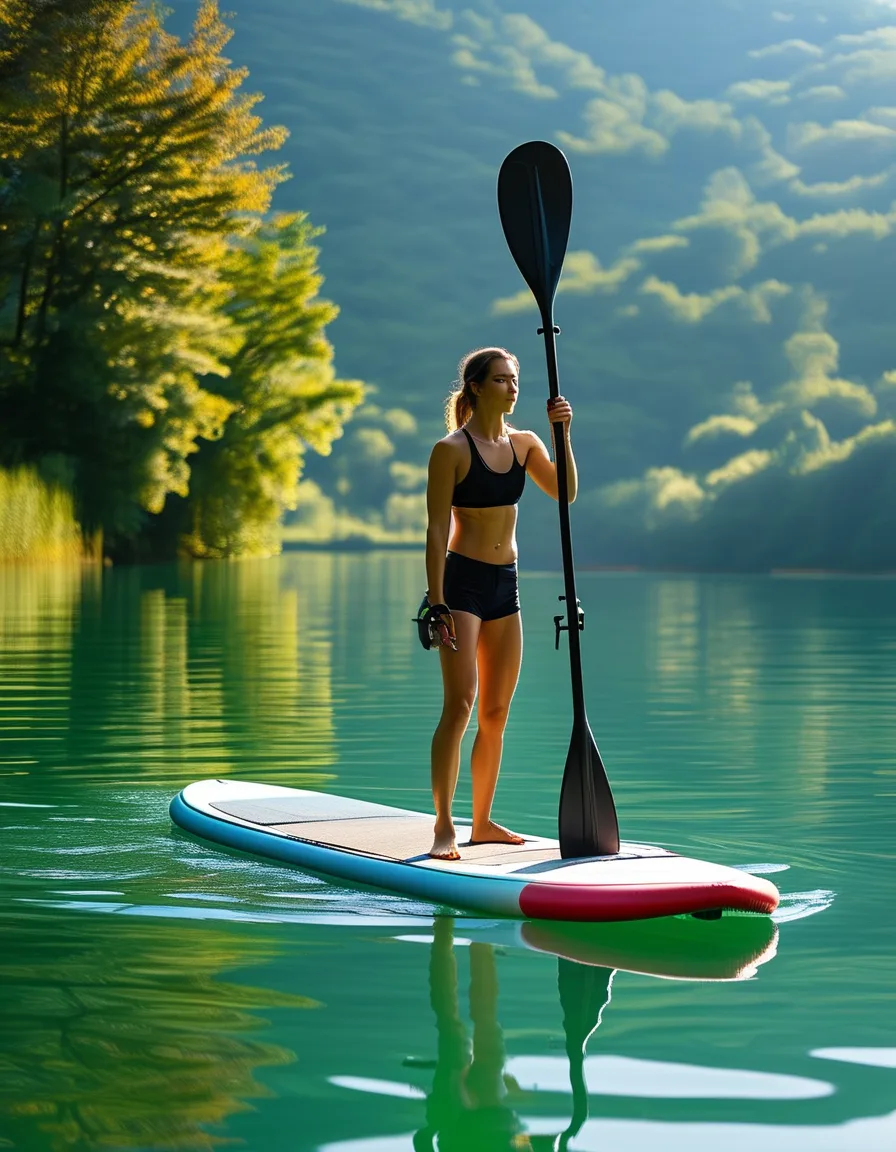
What happens when you fall in?
You get wet, everyone laughs, and you climb back on. That’s the entire event.
Falling is expected, traditional, and mildly celebrated — most classes cheer. It’s also completely benign, because the whole thing happens over warm calm water from a height of about eight inches.
Climbing back on: grab the center of the board, kick your legs up behind you to get horizontal, and slide on from the side at the middle. Trying to climb on at the nose or tail flips the board, which is how one fall becomes two.
The entire preparation:
- Quick-dry everything. A swimsuit under a fitted top, or a swimsuit with high waist yoga pants in a quick-dry fabric — anything cotton stays heavy and cold for the rest of the class.
- Secure your sunglasses with a strap, or leave them on shore. This is the most commonly lost item in SUP yoga by a wide margin.
- Leave the phone in the car. No case is worth the test.
- Reef-safe sunscreen, applied 20 minutes before, since you’re on reflective water for an hour.
Falling gracefully is, honestly, its own pose.
Is the floating savasana really that good?
It’s the reason people come back, and it’s not close.
The closing pose is you lying flat on an anchored board, drifting slightly, water moving underneath, sky directly overhead, no ceiling and no other bodies within arm’s reach. The board provides gentle continuous motion that most people find deeply regulating.
SUP yogis consistently describe it as the practice’s whole justification. The land version doesn’t quite compare afterward, which is a small tragedy you accept.
Practical note: classes run on summer mornings, when water is calmest and boat traffic is lowest. Wind is the limiting factor, not temperature — anything above about 10 mph makes a class difficult regardless of how warm it is. The absurdity is seasonal, which is part of what makes it worth chasing.
A note on balance: SUP yoga takes place on open water, so basic water competence is a genuine prerequisite. Wear or carry a personal flotation device where local rules require it, choose a class in shallow calm water for your first time, and tell the instructor if you’re not a confident swimmer — every good instructor will accommodate this. See a professional — your physician — before starting if you’re pregnant, have a balance or inner-ear condition, or are recovering from a joint injury.
What Nobody Tells You
- Your first class will humble you in a specific, funny way. People who have practiced yoga for a decade wobble in table top. It’s universal and it passes.
- Wider boards are dramatically easier. Dedicated yoga boards run 32–36 inches wide versus about 30 for a touring board. If you get a choice, take the wide one.
- Cold water changes everything. The whole “falling is fun” premise depends on warm water. In cold water it’s a different, less charming activity.
- You’ll use your feet more than you expect. Gripping and micro-adjusting through the feet is most of what keeps you on the board, and your arches will tell you about it the next day.
- A calm-looking lake still has wakes. A passing boat two minutes into savasana is part of the deal, and learning not to tense against it is half the practice.
FAQ
Do you need to be good at yoga to try SUP yoga?
No — beginner-friendly classes stay in low, wide poses that don’t require any prior flexibility or strength. What matters far more is basic comfort in water and willingness to fall in. Experienced yogis and total beginners tend to struggle in the same places, since the balance demand is new to both.
What should you wear for SUP yoga?
A swimsuit as a base layer with quick-dry activewear over it — fitted rather than loose, so nothing catches or shifts in poses. Avoid cotton entirely, since it stays cold and heavy after a fall. Secure sunglasses with a strap or leave them behind, apply reef-safe sunscreen beforehand, and leave your phone on shore.
Is SUP yoga a good workout?
It’s a better core and stabilizer workout than the pose list suggests, because the balance correction is continuous rather than intermittent. It’s less demanding cardiovascularly than a vigorous land flow but noticeably harder in terms of small stabilizing muscles, especially through the feet, ankles, and deep abdominals.
TL;DR:
- The moving board makes stabilizers fire continuously — that’s the workout.
- Classes start low and wide: seated flows, table top, sphinx, child’s pose. Standing poses come much later or never.
- Boards are usually anchored; position yourself over the widest point.
- You’ll fall in. Climb back on from the side at the center, never the nose.
- Quick-dry everything, secure your sunglasses, leave the phone on shore.
- The floating savasana is the reason people come back.
- Basic water competence is a real prerequisite; check with your physician if pregnant or managing a balance condition.
Keep Reading
This article is for general informational and styling purposes only. Fit, sizing, and product availability may vary.