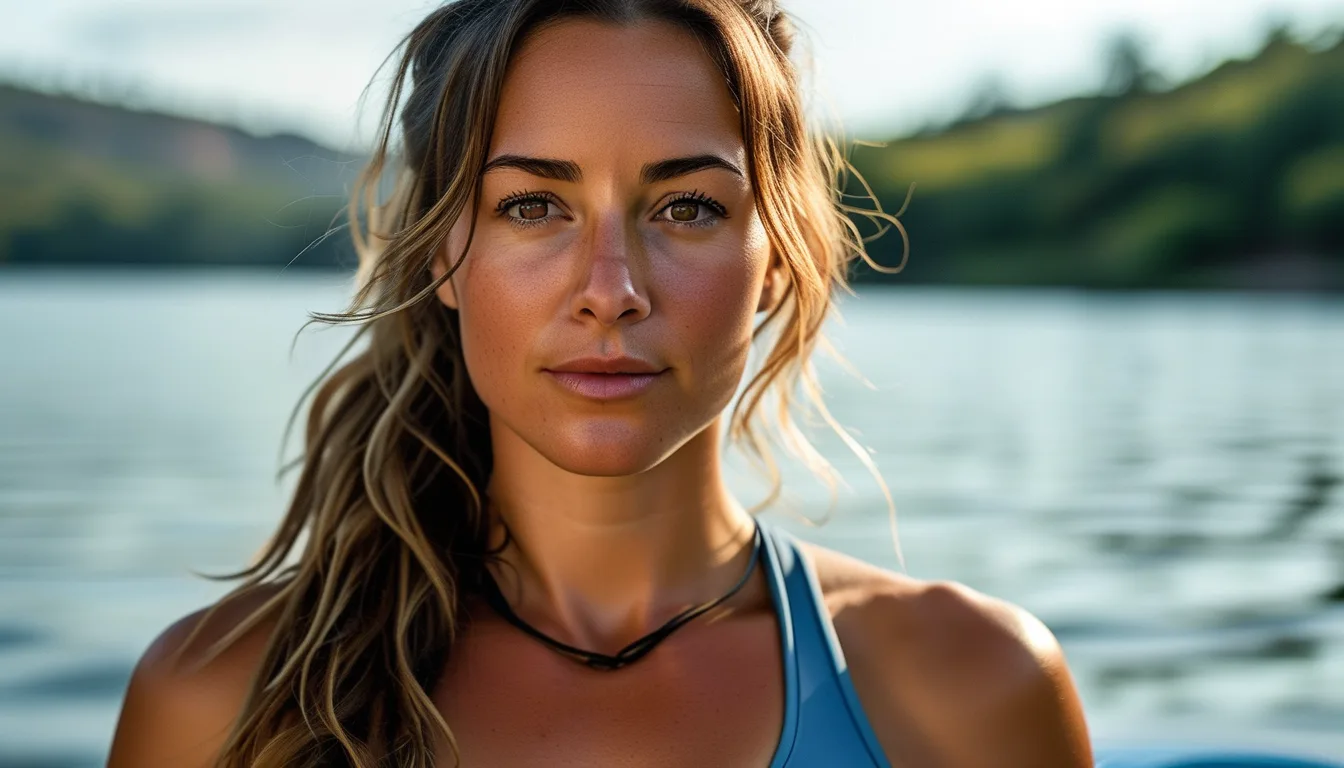
Why Paddleboard Balance Often Improves Faster With Dry-Land Drills Than With More Time on the Water
Quick Answer: Paddleboard balance often improves faster with dry-land drills than with more water time because every session on the water mixes your actual skill with that day’s chop, wind, and current — so you can’t tell improvement from a calm day. A balance board or similar tool keeps the surface constant, which makes progress measurable. Ten minutes of land drills, 3–4 times a week, alongside your normal paddling.
You had a great session Tuesday and a wobbly one Saturday. Did you get worse?
Probably not. Saturday just had wind.
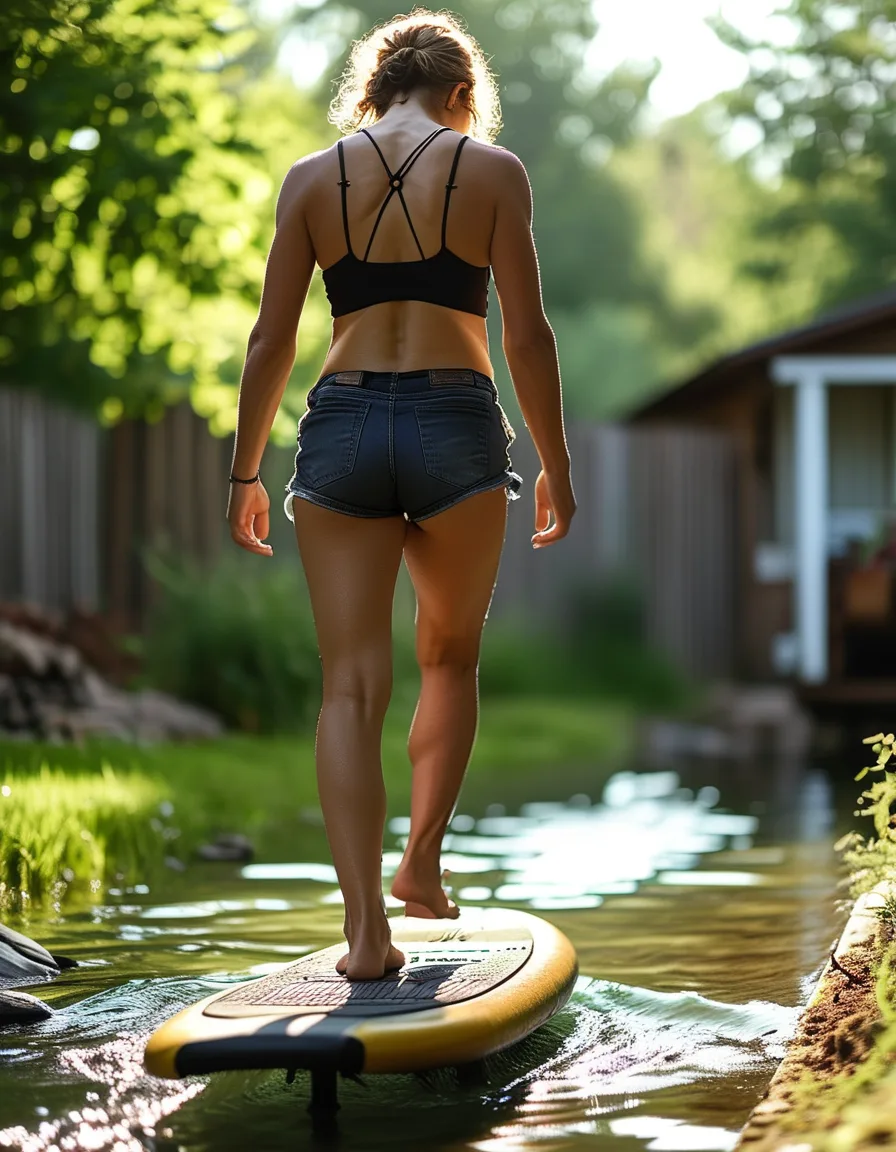
Why Doesn’t More Time on the Water Improve Balance Faster?
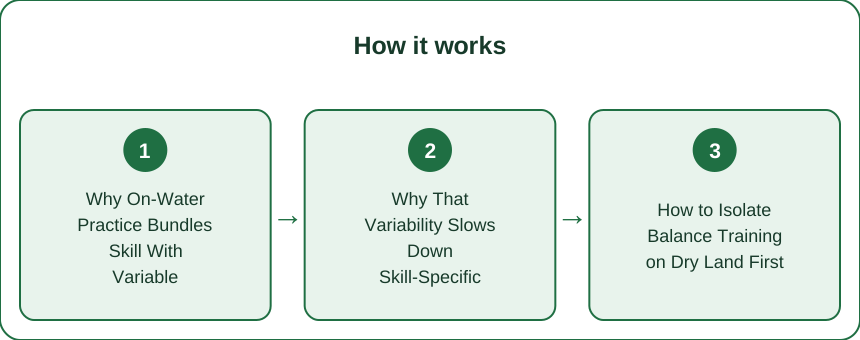
Because on-water sessions bundle two things together and give you one result.
Every time you go out, your performance is some combination of your actual balance ability and the conditions that day: wave chop, wind direction and speed, boat wake, current, water temperature affecting how tense you are. None of those repeat. A statistician would call the conditions a confounding variable, and it’s a big one — the difference between glassy water and 10 mph of cross-chop is far larger than the balance improvement you’d expect from two weeks of practice.
So when a session goes badly, you genuinely can’t tell whether you regressed or whether the lake was choppier. And when it goes well, you can’t tell whether you improved or got lucky.
That’s the core problem: the feedback is real, but it’s too noisy to learn from efficiently.
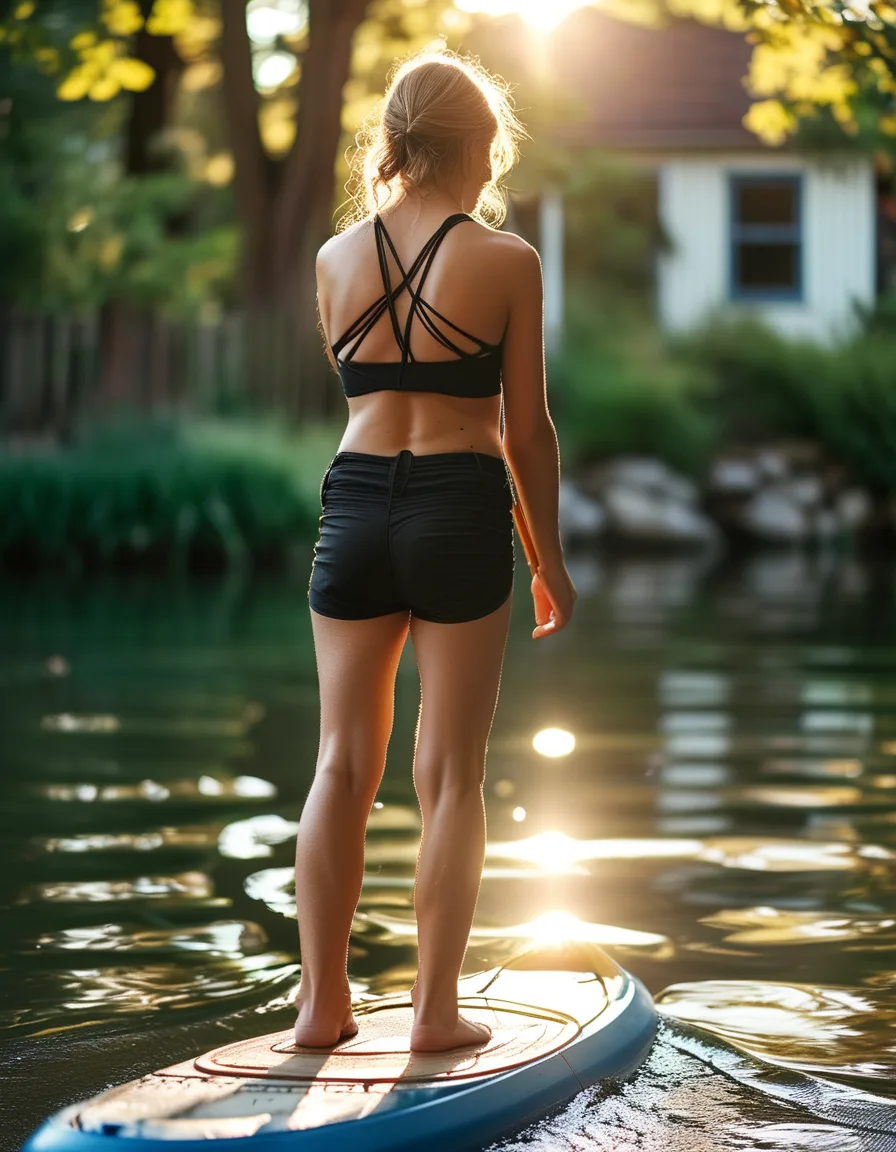
Why Does Noisy Feedback Slow Learning Down?
Because motor learning depends on being able to connect what you did to what happened.
When you adjust something — widen your stance, drop your center of gravity, look at the horizon instead of your feet — you need to know whether that adjustment helped. If the surface underneath you changes at the same time, the signal gets buried. You’ll try a good adjustment on a rough day, conclude it didn’t work, and drop it.
There’s a second cost. Rough conditions push beginners into survival mode, and survival mode teaches bad habits: rigid legs, hunched shoulders, eyes locked on the board. Those are the exact patterns you’ll then need to unlearn.
None of this means water time is wasted — it’s obviously where the sport happens, and it’s where you build the water-reading and paddle skills that land drills can’t touch. It just means water time is an inefficient place to isolate balance specifically.
What Dry-Land Drills Improve Paddleboard Balance?
The point is a surface that behaves identically every session, so any change in your performance is actually you.
Balance board (roller or rocker), 10 minutes, 3–4× per week. Start holding a wall. Progress: two hands → one hand → no hands → no hands with your eyes on a fixed point across the room. Time yourself. A number that goes from 20 seconds to 90 seconds across three weeks is unambiguous evidence, in a way that “Saturday felt better” never is.
Single-leg stands, 30–60 seconds per side. Progress by closing your eyes, which removes visual input and forces your proprioceptive and vestibular systems to do the work. This is harder than it sounds and it transfers well.
Bosu or cushion squats and paddle-motion practice. An unstable surface plus the actual paddling motion trains the rotational stability that keeps you upright when you reach forward for a stroke — which is the moment most beginners fall in.
Standing core work — Pallof presses, suitcase carries, side planks. Balance on a board is largely anti-rotation strength. If your torso can’t resist being twisted by a paddle stroke, no amount of ankle work saves you.
A workable split: land drills 3–4 times a week for 10–15 minutes, water sessions whenever you can get them. The land work makes the water sessions more productive rather than replacing them.
What Nobody Tells You About Where You’re Looking
The single fastest balance improvement most beginners can make has nothing to do with strength or practice volume. It’s eye position.
Looking down at your feet or the nose of the board gives your vestibular system a reference that’s moving with you — which is no reference at all. Fixing your gaze on the horizon or a stationary point on shore gives it a stable frame, and stability improves almost immediately.
It’s the same reason dancers spot a fixed point when they turn. Ten seconds of instruction, an outsized effect, and it’s usually the thing standing between a nervous beginner and a decent first session.
FAQ
How long does it take to get comfortable on a paddleboard?
Most people can stand and paddle in flat conditions within their first session or two. Feeling genuinely stable — not thinking about balance while you paddle — typically takes 5–10 outings, and land drills tend to pull that toward the low end because they build the stabilizer strength faster than occasional weekend sessions do.
Do I need a balance board, or can I use something else?
A balance board is the closest match, but single-leg stands with eyes closed require nothing and cover a lot of the same ground. A folded pillow or a couch cushion makes an acceptable unstable surface for squats and stands if you don’t want to buy equipment.
Should I still paddle while doing land drills?
Yes — land work builds the stability, water time builds everything else: paddle technique, reading conditions, turning, falling and remounting comfortably. Treat land drills as a supplement that makes each water session count for more, not a substitute for going out.
General fitness and recreation guidance. Always wear a personal flotation device and check local conditions before heading out.
TL;DR:
- On-water sessions mix your balance skill with that day’s chop and wind, so you can’t read your own progress
- Noisy feedback slows motor learning — you’ll discard good adjustments that happened to land on a rough day
- A balance board keeps the surface constant, so improvement in hold time is genuinely you
- Do 10–15 minutes of land drills 3–4× a week: balance board, single-leg stands, unstable-surface squats, anti-rotation core
- Free instant fix: look at the horizon, not your feet
Keep Reading
This article is for general informational and styling purposes only. Fit, sizing, and product availability may vary.