Why Your Paddleboard Balance Improves Faster Off the Water Than On It
Quick Answer: On-water SUP practice trains balance under constantly changing conditions, which is valuable but inconsistent — land-based balance drills (single-leg stands, wobble boards) isolate and repeat the exact proprioceptive skill more precisely, building the base faster than water time alone. Combining both accelerates progress more than either alone.
You’ve paddled every weekend for a month and your balance still feels shaky on choppy water — meanwhile, the falls keep happening at roughly the same rate, which suggests water time alone isn’t isolating the skill efficiently.
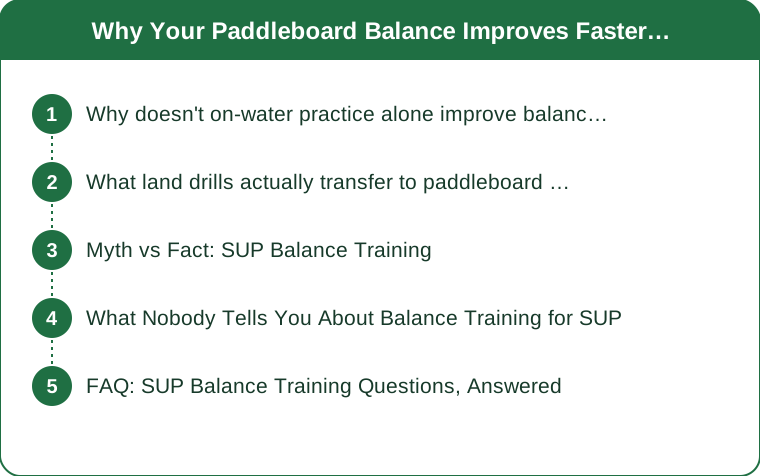
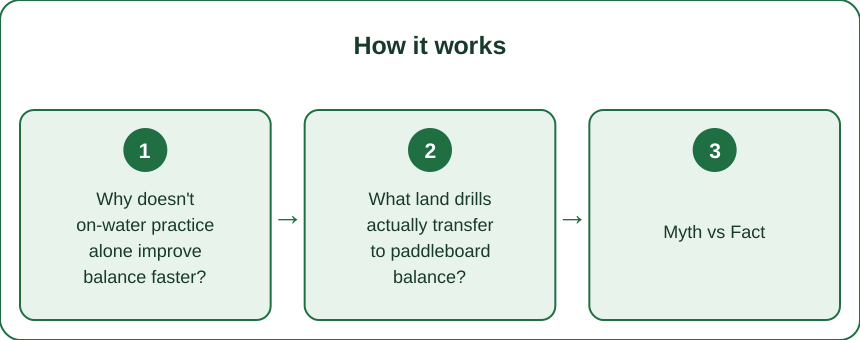
Why doesn’t on-water practice alone improve balance faster?
Water conditions change constantly and unpredictably — wind, chop, current — which means every session trains a slightly different, uncontrolled balance challenge. This variability is valuable for real-world adaptability, but it means you rarely get enough consistent repetition of the specific proprioceptive skill (ankle and core micro-adjustments) to build it quickly.
Land-based balance training removes the unpredictable water variable, letting you drill the same specific stabilizing movement pattern repeatedly and precisely — which is what actually builds the base skill fastest.
What land drills actually transfer to paddleboard balance?
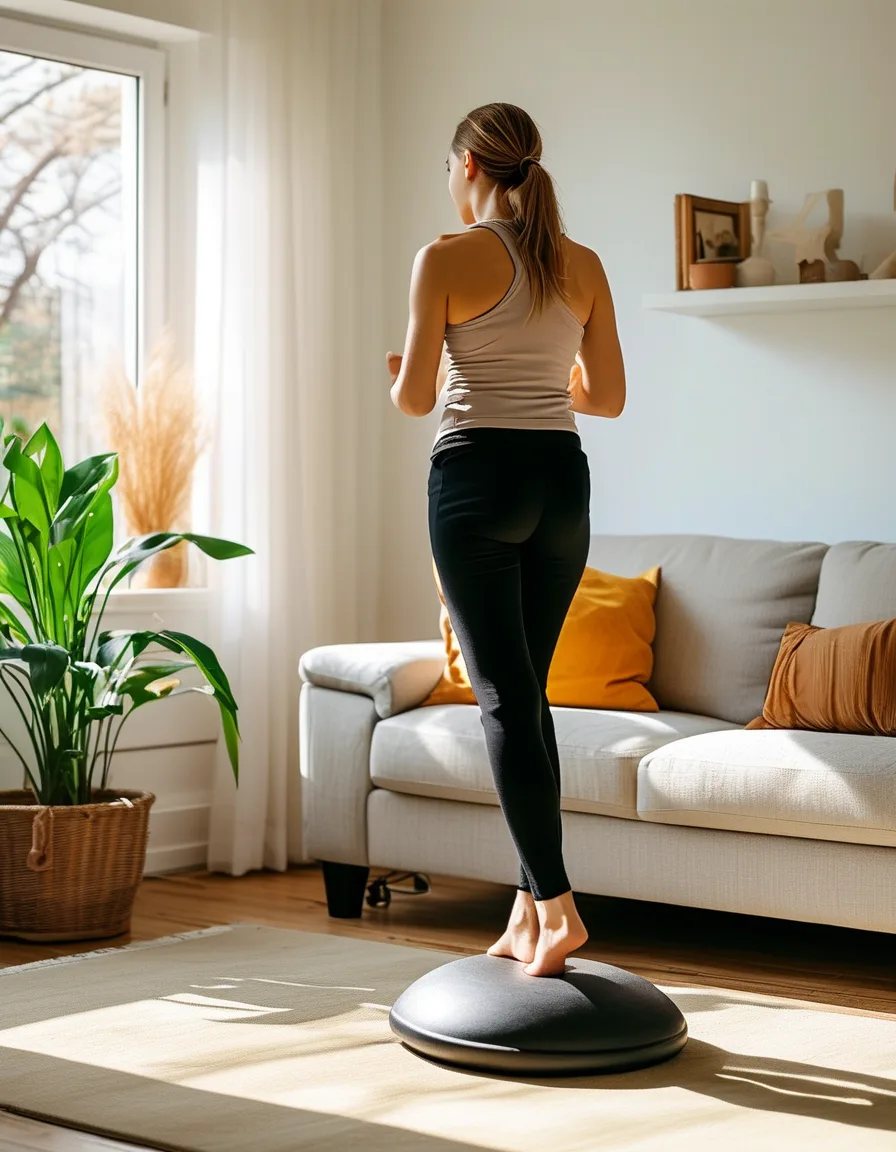
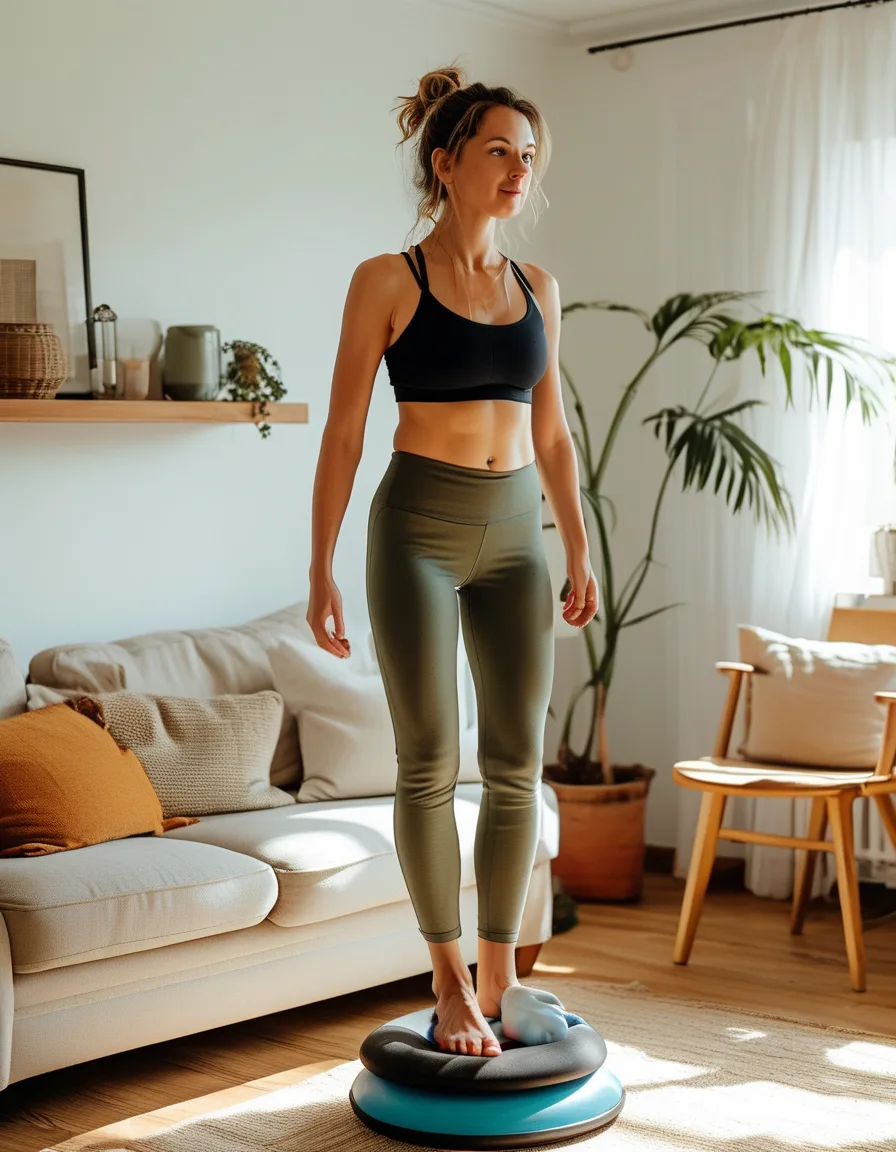
Single-leg stands with eyes closed (10-30 seconds, progressing) train the ankle and core stabilization system directly. A wobble board or balance disc replicates the unstable-surface challenge more controllably than open water, letting you push balance limits safely.
Adding a light overhead reach or arm movement while balancing on one leg mimics the paddle-stroke destabilization pattern specifically, making the land drill more directly transferable to actual paddling balance.
Myth vs Fact: SUP Balance Training
Myth: The only way to improve paddleboard balance is more time on the water. Fact: Land-based balance drills isolate the specific proprioceptive skill more efficiently, often accelerating progress faster than water time alone.
Myth: Core strength alone determines paddleboard balance. Fact: Ankle and small stabilizer muscle coordination matter as much as core strength — balance is a coordination skill, not just a strength metric.
Myth: Falling more on the water is the fastest way to build balance tolerance. Fact: Controlled, repeatable land drills build the underlying skill more efficiently than unpredictable falls, which mostly teach fall recovery, not proactive balance.
What Nobody Tells You About Balance Training for SUP
Closing your eyes during land balance drills accelerates progress significantly, since it forces your body to rely on proprioceptive (internal body-position) feedback rather than visual cues — and water balance, especially at dusk or on glare-heavy water, relies more heavily on that same internal feedback system.
Most people plateau in on-water balance progress around the 4-6 week mark of pure water practice; adding just 2-3 land sessions a week during that plateau period often breaks through faster than adding more water sessions alone.
FAQ: SUP Balance Training Questions, Answered
How often should I do land balance drills to see improvement?
2-3 short sessions a week (5-10 minutes each) is enough to see meaningful transfer within a few weeks.
Do I need special equipment like a wobble board?
No — single-leg stands alone, progressing to eyes-closed versions, provide most of the benefit without needing equipment.
Will land drills fully replace the need for on-water practice?
No — water practice still teaches conditions-specific adaptation that land drills can’t replicate; the two work best combined.
TL;DR:
- Water conditions change too unpredictably to isolate the specific balance skill efficiently
- Land drills like single-leg stands and wobble boards build the proprioceptive base faster
- Ankle and small stabilizer coordination matter as much as core strength for SUP balance
- Combining land drills with water practice breaks through plateaus faster than either alone
If your balance has plateaued despite regular paddling, the fastest fix might be a few minutes on dry land, not more time on the water.
Keep Reading
This article is for general informational and styling purposes only. Fit, sizing, and product availability may vary.